Milestones of a Musical Year That Defied Barriers
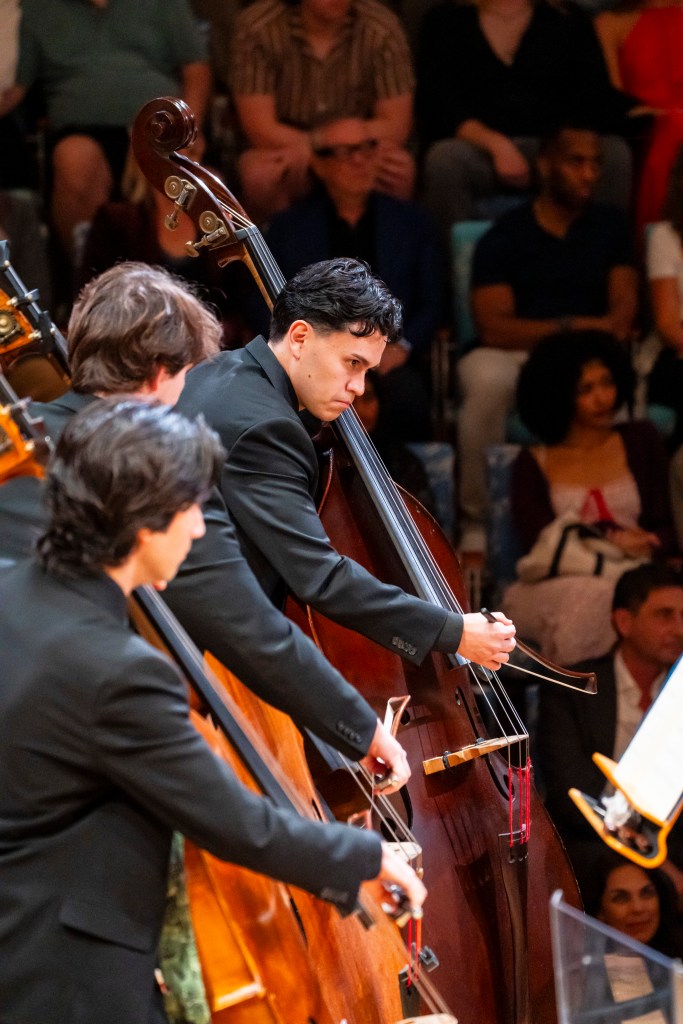
In Miami, great music not only survives—it persists with conviction. Amid urban complications, cultural fragmentation, and the logistical hurdles that so often accompany large-scale events, the city once again demonstrated its capacity to sustain musical life at the highest level.
The Arsht Center’s Classical Series closed the 2024–25 season with a sequence of concerts that reaffirmed the enduring power of symphonic music and the commitment of a public willing to overcome inconveniences—parking included—in order to encounter art that transcends circumstance.
The season’s orchestral highlights were formidable. The Chicago Symphony Orchestra, under hte legendary Riccardo Muti, brought an unmistakable sense of authority and tradition. The program—Schubert’s Symphony No. 8 (“Unfinished”), Tchaikovsky’s Symphony No. 4, and the overture to Bellini’s Norma—embodied the Central European symphonic canon and belcanto at its most eloquent. Muti’s interpretations emphasized structural clarity, architectural balance, and a nobility of phrasing that reaffirmed his stature as one of the great custodians of the «grand» tradition.
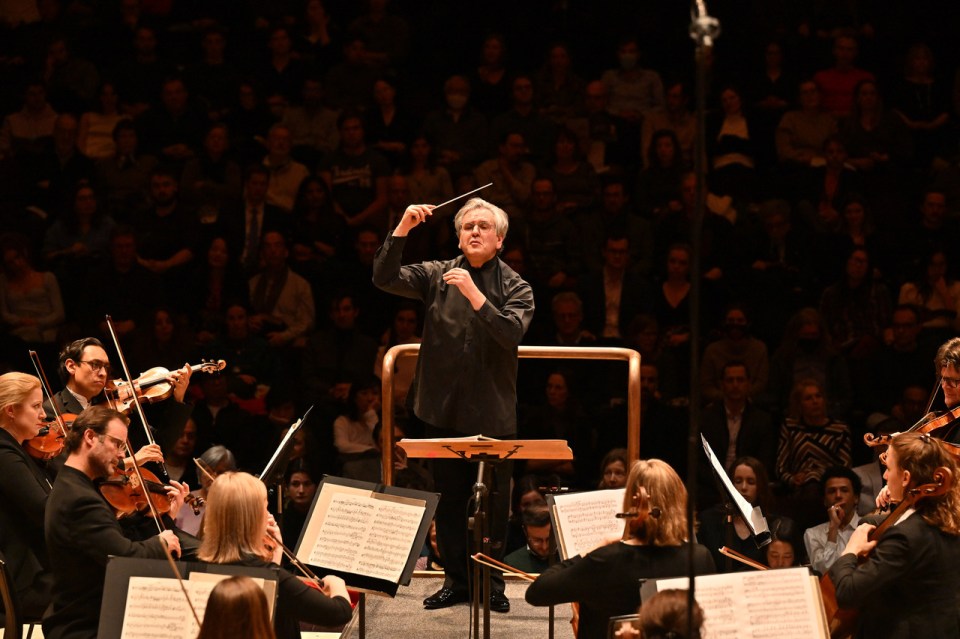
In March, the London Symphony Orchestra under Sir Antonio Pappano delivered one of the most compelling concerts of the series. With violinist Janine Jansen as soloist, Bernstein’s Serenade (after Plato’s “Symposium”) emerged as both intellectually probing and sensuously lyrical. Pappano’s instinctive theatricality and rhythmic vitality brought urgency and coherence to the score, while Jansen’s playing combined refinement, intensity, and expressive depth. By contrast, the Israel Philharmonic Orchestra, led by the young and talented Lahav Shani, offered a solid and musically persuasive evening, though its overall impact remained slightly below the standard set by the London ensemble.
The National Symphony Orchestra, under Gianandrea Noseda, revealed a level of polish and expressive unity that stood among the season’s most impressive achievements. Hilary Hahn’s performance of Brahms’s Violin Concerto was a model of classical equilibrium: technically immaculate and emotionally restrained without sacrificing warmth. Noseda’s accompaniment provided rhythmic firmness and structural support, while Beethoven’s Fifth Symphony—so often over-familiar—emerged revitalized, propelled by incisive articulation and a sense of inevitability.
The Cleveland Orchestra offered spectacular performances with star violinists Sayaka Shoji and María Dueñas, under the batons of Kahchun Wong and Stéphane Denève, respectively. Their reading of Mussorgsky’s Pictures at an Exhibition in Ravel’s orchestration was a display of color, transparency, and precision, transforming each note into vivid imagery.
In Miami Beach, the farewell of Michael Tilson Thomas marked a milestone in the history of the New World Symphony, which he founded twenty-seven years ago. Fittingly, MTT took his leave with Beethoven’s Fifth Symphony, the same work that inaugurated the orchestra in 1988. It was an evening of intense emotion, culminating in a long goodbye and a nostalgically apt encore: Grieg’s ever-youthful “Spring.” —that served as a lyrical benediction.
Following the path laid by MTT, the orchestra showed renewed vitality under the leadership of French conductor Stéphane Denève, who delivered some of the season’s finest moments. His performance of Britten’s War Requiem stood as another landmark. The combination of first-rate soloists—most memorably the Agnus Dei sung by Ian Bostridge and Roderick Williams—created an unforgettable emotional and artistic experience, resulting in a resounding success within the Resonance of Remembrance series, commemorating the 80th anniversary of the end of World War II and the Holocaust. The result was a performance that resonated far beyond the concert hall.
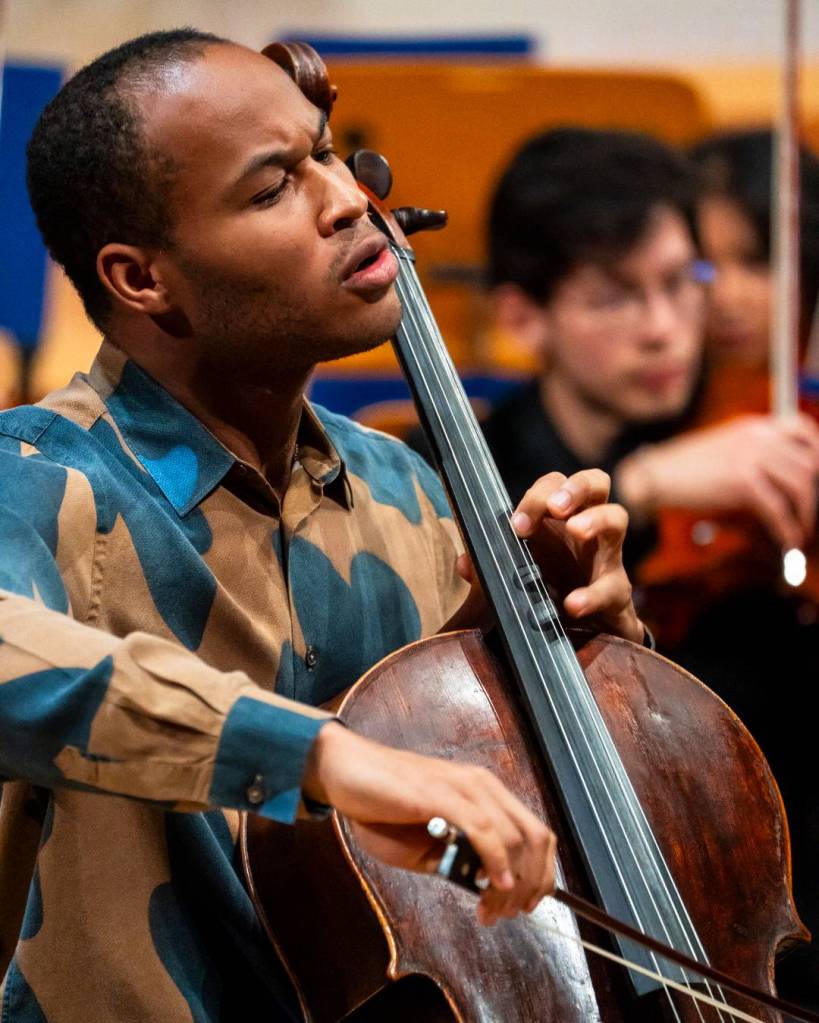
The final concerts of the season 2024-25 showcased both continuity and renewal. The awaited debuts of cellist Sheku Kanneh-Mason and conductor Edward Gardner added luster and fresh perspective. Kanneh-Mason’s reading of Shostakovich’s First Cello Concerto was distinguished by rhythmic bite, tonal focus, and emotional immediacy. His encore—a pizzicato rendering of Bob Marley’s “She Used to Call Me”—was both unexpected and disarmingly personal.
Edward Gardner’s debut, featuring Gil Shaham, brought Dvořák’s Violin Concerto to life with warmth and natural lyricism. Shaham’s playing, noble and conversational, found an ideal partner in Gardner’s attentive and flexible leadership. Bartók’s Concerto for Orchestra followed, offering a rigorous test of ensemble virtuosity and interpretive insight—one that the orchestra met with distinction.
The season’s opening Wallcast set a tone of civic engagement and symbolic resonance. At SoundScape Park, Denève launched the evening with Copland’s Fanfare for the Common Man. Zewei Ma, the orchestra’s newly appointed conducting fellow, made an impressive debut with James Lee III’s Chuphshah! Harriet’s Drive to Canaan. Beethoven’s Eroica unfolded with disciplined intensity, while Copland’s Lincoln Portrait, narrated by Joshua Malina and accompanied by projected images of the Lincoln Memorial, reinforced a message of democratic responsibility and moral resolve.
Among the soloists who left an indelible mark was Nicolaj Szeps-Znaider, whose commanding performance of Tchaikovsky’s Violin Concerto balanced grandeur with lyric intimacy, capped by an encore of Ponce’s “Estrellita.” Florence Price’s Symphony No. 3 emerged as another highlight, with Denève emphasizing its rhythmic vitality and structural clarity.
Venezuelan conductor Domingo Hindoyan brought freshness and balance to Dvořák’s New World Symphony, while Alban Gerhardt delivered a compelling account of Shostakovich’s Second Cello Concerto.
The season’s crowning orchestral event was Manfred Honeck’s return, leading the New World Symphony in the, alas, only Mahler of the year. Honeck’s program—Johann Strauss II’s Die Fledermaus overture, Haydn’s Symphony No. 93, and Mahler’s Fourth Symphony—offered a quintessentially Viennese journey. The Strauss sparkled with elegance and wit; Haydn unfolded with classical poise; and Mahler’s Fourth revealed Honeck’s gift for detail, proportion, and poetic transcendence. The third movement reached a level of hushed sublimity, and soprano Lauren Snouffer’s radiant delivery of the final song captured the childlike vision of heaven with touching sincerity.
Beyond symphonic fare, Florida Grand Opera opened its season with Kevin Puts’s Silent Night, recounting the Christmas truce of 1914. Tomer Zvulun’s staging, with its multi-level trench design, offered a lucid visual metaphor. Tenor Kameron Lopreore and soprano Sarah Joy Miller stood out, the latter delivering a striking a cappella soliloquy. Though less monumental than Weinberg’s The Passenger, the opera reaffirmed the enduring relevance of contemporary works that explore human compassion amid conflict.
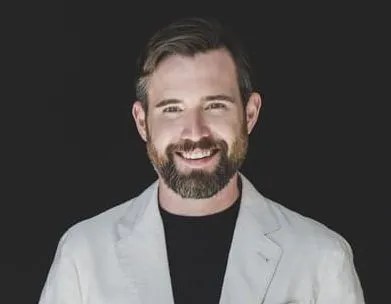
Seraphic Fire, under founder Patrick Dupre Quigley, offered a transcendent evening with Bach’s six Motets, part of Quigley’s gradual farewell after twenty-five years at the helm. The ensemble’s transparent sonority, immaculate balance, and expressive restraint brought Bach’s sacred polyphony to luminous life, eliciting a deeply focused response from a full house.
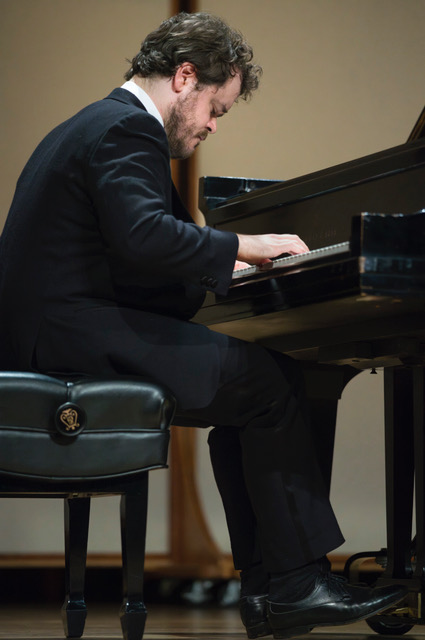
The final jewel of the season came from Friends of Chamber Music, with a recital by Benjamin Grosvenor. The young British pianist, a frequent visitor to the venerable institution founded by the late Julian Kreeger, displayed enviable maturity and remarkable artistic growth in an exceptionally demanding program that included Chopin’s Second Sonata, Ravel’s Gaspard de la nuit, and Mussorgsky’s Pictures at an Exhibition. Each was rendered in a performance that was nothing short of memorable, confirming Grosvenor’s evolution into a major artistic voice.
Once again, Miami affirmed that, regardless of obstacles, great music not only finds its way—it defines the city’s cultural spirit.

