NWS, musical declaración de principios
El puntapié inicial de la temporada 2025-26 de la New World Symphony tuvo rasgos tan inusuales como únicos. No se trató solo de un espléndido concierto, sino de una notable declaración de principios que fue ganando intensidad a medida que avanzó la velada. Una noche memorable por su implicancia y proyección, que trascendió los límites meramente musicales: en síntesis, otra oportunidad para constatar a la música como noble mensajera del espíritu humano. Un momento de afirmación, de confianza en la superación constante y de reflexión sobre cómo lograrla y mantenerse íntegros en un mundo caótico.
Stéphane Denève abrió la velada con la “Fanfarria para el hombre común” de Aaron Copland, obra siempre bienvenida que sonó solemne y a la vez accesible, ejecutada al aire libre en el SoundScape Park, engalanado con un extraordinario flamante sistema de sonido. Denève sorprendió brindando cálida bienvenida a los asistentes del primer Wallcast de la temporada.
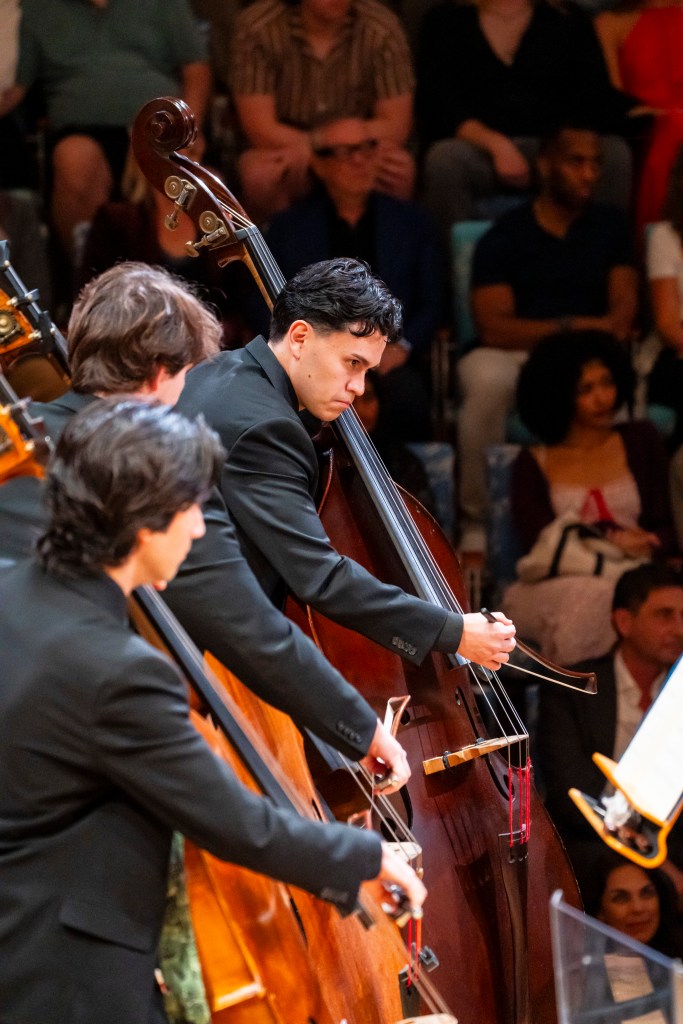
Ya en la sala Michael Tilson Thomas, tuvo lugar el debut oficial del nuevo becario de dirección orquestal, Zewei Ma, quien condujo con aplomo “Chuphshah! Harriet’s Drive to Canaan” de James Lee III. Este retrato musical de la abolicionista —y ex esclava— Harriet Tubman, vista como una suerte de Moisés, utiliza el término hebreo chuphshah para evocar el camino hacia la libertad. El compositor combina hábilmente frases musicales de diversas fuentes —himnos, spirituals y canciones populares— y, mediante contrastantes contrapuntos, pinta un vívido retrato de la heroína y su época. El joven Ma navegó con pericia estas exigencias al frente de la Academia Orquestal de América, integrada por treinta y siete nuevos becarios, detalle a destacar por el de destacable nivel en esta primera presentación.
Beethoven aportó imprescindible fuego sagrado a la segunda mitad del programa con su Tercera Sinfonía, “Heroica”, esa arrolladora obra del albor del siglo XIX que cambió la historia de la música. Su creador, surgiendo heroico del abismo personal, logra un coloso sonoro en gesto de sobrehumana superación. En la sublimeMarcha fúnebre “a la muerte de un héroe”, introduce por primera vez en el género sinfónico la noción de muerte y conmemoración —como señala Lewis Lockwood—, y al borrar furibundo la dedicatoria a Napoleón para sustituirla por “A la memoria de un gran hombre”, convierte la obra en un espejo universal: cada oyente es el héroe llamado a forjar su propio destino.
Denève, en plena sintonía con el corte filosófico del programa, condujo una versión de intención febril e intensidad controlada, con rasgos historicistas, texturas elementales y aristas poco frecuentes. La Marcha fúnebre llegó como un bálsamo: una solemne y dulce invitación al sueño eterno, mientras la célebre coda volvió a encender el fuego prometeico que da origen a toda la sinfonía.
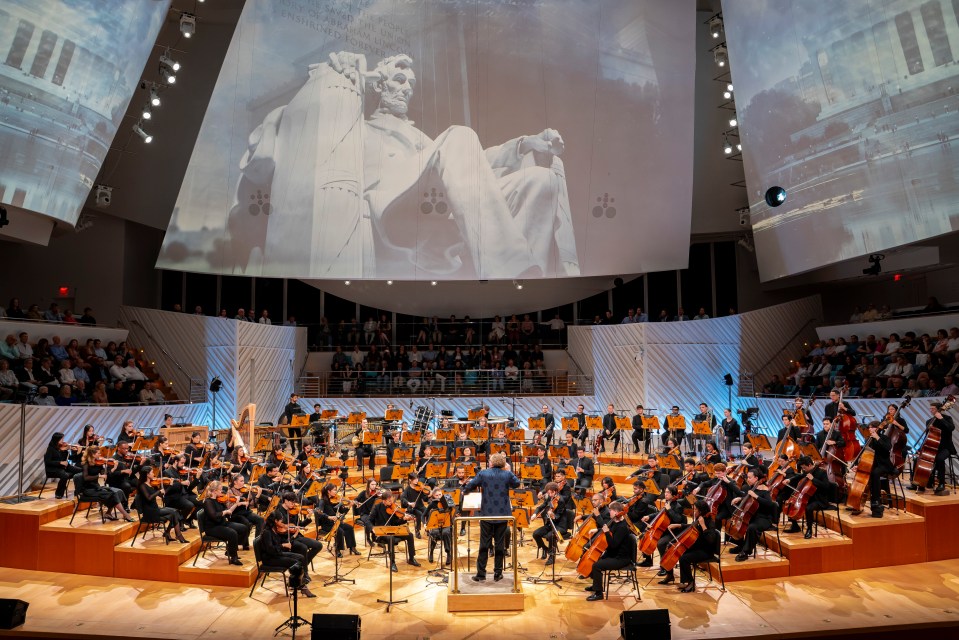
Antes de la “Heroica”, la orquesta presentó el “Retrato de Lincoln” de Copland, obra clave en la identidad musical estadounidense. La elección de interpretarla en este contexto resultó profundamente simbólica, haciéndose eco de la historiadora Kaylyn Sawyer, “Se ha presentado para celebrar victorias de la democracia, para consolar en tiempos de conflicto, para inspirar hacia la grandeza y para exhortar a la acción cuando sus principios se han visto amenazados. Lejos de ser una obra patriótica superficial, Lincoln Portrait es un poderoso monumento musical, recibido por audiencias que comparan la grandeza de Lincoln con la historia de una América que lucha por vivir conforme a sus ideales de libertad e igualdad.”
Encargada a Copland por André Kostelanetz tras el ataque a Pearl Harbor —el compositor inicialmente pensó en un retrato de Walt Whitman—, la obra describe en tres secciones la personalidad de Lincoln, su tiempo y la fatalidad que lo acechaba, valiéndose de motivos propios junto a himnos y baladas populares. Es un verdadero “melting pot” sonoro, fascinante y significativo, que refuerza la visión de Lincoln como “hombre común”, en hermandad espiritual con la fanfarria que abrió el concierto.
Estrenada en 1942 por Kostelanetz y la Orquesta de Cincinnati, la obra ha gozado de un recorrido triunfal. Si en los años cincuenta fue menos interpretada por las investigaciones políticas a Copland, pronto recuperó su lugar como una de las más poderosas referencias de la música americana. La lista de recitadores que la han interpretado impresiona, entre tantos ilustres vale mencionar Marian Anderson, Henry Fonda, Paul Newman, Katharine Hepburn, Maya Angelou, James Earl Jones, Coretta Scott King, el propio Copland e incluso varios presidentes —Carter, Ford, Bush, Clinton y Obama.
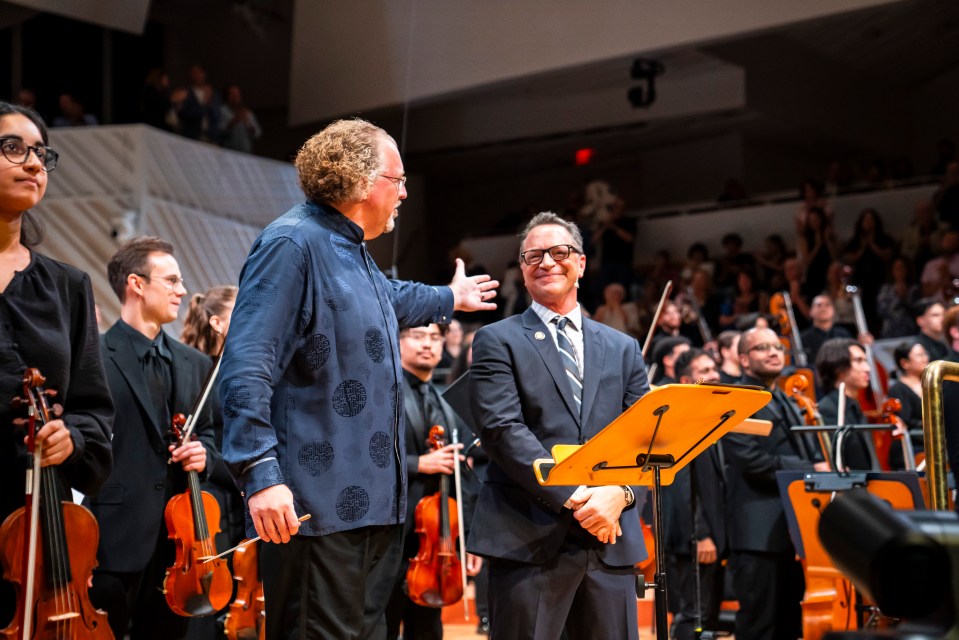
Para esta ocasión, la New World Symphony contó con el actor Joshua Malina (West Wing), impecable en su recitado: sobrio, claro y profundo, evitando el énfasis teatral para revelar la fuerza del texto, nunca tan pertinente como hoy.
Frente a la imponente imagen del monumento a Lincoln en Washington D.C. proyectada en las pantallas, Denève cinceló este “monumento musical” con fervor apasionado pero contenido. Supo graduar la intensidad sin caer en grandilocuencias, permitiendo que la música complementara y amplificara la fuerza moral del discurso.
Las palabras de Lincoln, afortunadamente proyectadas sobre las pantallas, apuntaron a un público absorto hasta resonar con estremecedora actualidad:
“Conciudadanos, no podemos escapar de la historia. Nosotros, los de este Congreso y esta administración, seremos recordados a pesar de nosotros mismos. La dura prueba que atravesamos nos iluminará, en honor o deshonra, para la nueva generación. Tenemos el poder y la responsabilidad… Así como no quisiera ser esclavo, tampoco quisiera ser amo. Esto expresa mi idea de democracia. Cualquier diferencia, en la medida de la diferencia, no es democracia.”
Un mensaje universal que trasciende fronteras y tiempos, invitando a redescubrir al gran presidente americano. Así, la New World Symphony inauguró su temporada con una velada de profundas resonancias, merecedora de la ovación final y del ferviente deseo de seguir escuchando —y haciendo valer— las palabras y los ideales de “Honest Abe.”
Próximos conciertos de la New World Symphony:
New World Symphony Opens Its 2025–26 Season with a Declaration of Principles
The opening concert of the New World Symphony’s 2025–26 season was as unusual as it was unique. It was not merely splendid but a remarkable declaration of artistic and human principles, one that grew in intensity as the evening unfolded. It became a memorable night of meaning and projection that transcended the strictly musical realm—a renewed confirmation of music as a noble messenger of the human spirit. A moment of affirmation, of trust in the power of daily improvement, and of reflection on how to achieve it while remaining upstanding in a chaotic world.
Stéphane Denève opened the evening with Aaron Copland’s «Fanfare for the Common Man«, always a welcome prelude, both solemn and accessible to every audience. Performed outdoors in SoundScape Park, enhanced by a superb new sound system, it surprised and warmly greeted the audience gathered for the first Wallcast of the season.
Once inside the Michael Tilson Thomas Performance Hall, the evening featured the official debut of conducting fellow Zewei Ma, who led James Lee III’s «Chuphshah! Harriet’s Drive to Canaan». This musical portrait of the abolitionist—and former slave—Harriet Tubman, depicted as a modern-day Moses, uses the Hebrew word chuphshah to symbolize the journey toward freedom. The composer skillfully weaves together phrases from hymns, spirituals, and popular songs, and through vivid contrapuntal textures paints a striking image of Tubman and her time. Ma navigated these challenges with confidence, leading the New World Symphony’s 37 new orchestral academy fellows, whose exceptional performance level stood out in this first outing.
Beethoven brought sacred fire to the second half of the program with his Symphony No. 3, “Eroica”, that sweeping work of early nineteenth-century revolution that changed the course of music. Confronting his own demons and abyss , Beethoven forged here a sonic colossus in a gesture of almost superhuman defiance. In the sublime Funeral March “for the death of a hero,” Beethoven, as scholar Lewis Lockwood reminds us, introduces death and commemoration into the symphonic form for the first time. By furiously erasing the original dedication to Napoleon and replacing it with “To the memory of a great man,” he turned the work into a universal mirror—each listener is the hero called to shape their own destiny.
In keeping with the philosophical tone of the evening, Denève offered a reading of feverish intention and controlled intensity, marked by historically informed clarity and unusual sharpness of texture. The Funeral March arrived as a balm—a solemn yet gentle invitation to eternal rest—while the celebrated coda rekindled the Promethean spark that gave birth to the entire symphony.
Before the Eroica, the orchestra presented Copland’s “Lincoln Portrait,” a cornerstone of American musical identity. The decision to include it was both timely and symbolic. As historian Kaylyn Sawyer notes, “It has been performed to celebrate victories of democracy, to console in times of conflict, to inspire Americans toward greatness, and to exhort them to action when cherished principles have been threatened. Far from being a hollow patriotic gesture, Lincoln Portrait is a powerful musical monument, received by audiences who see in Lincoln’s greatness the story of an America striving to live up to its ideals of freedom and equality.”
Commissioned by André Kostelanetz after the attack on Pearl Harbor—Copland had first considered Walt Whitman as a candidate—the work unfolds in three sections portraying Lincoln’s character, his time, and the fate that awaited him. Copland enriches his own themes with period hymns and ballads, creating a fascinating and meaningful “melting pot” of sound, emphasizing Lincoln as the “common man,” in spiritual kinship with the fanfare that opened the evening.
Premiered in 1942 by Kostelanetz and the Cincinnati Symphony Orchestra, the work has enjoyed a triumphant trajectory ever since. Though less frequently performed in the 1950s, when Copland faced political scrutiny, it later reaffirmed its place as one of the most powerful statements in American music. The list of distinguished narrators is breathtaking, to name a few, Marian Anderson, Henry Fonda, Paul Newman, Katharine Hepburn, Maya Angelou, James Earl Jones, Coretta Scott King, Copland himself, and even several U.S. presidents—Carter, Ford, Bush, Clinton, and Obama.
For this performance, the New World Symphony was joined by actor Joshua Malina (The West Wing), who delivered the narration with impeccable restraint—clear, sincere, and moving, avoiding theatrical excess to reveal the enduring strength of Lincoln’s words.
Conducting before a projected image of the Lincoln Memorial in Washington, D.C., Denève shaped this “musical monument” with passionate yet measured fervor, wisely pacing the score’s intensity and resisting the temptation of grandeur for its own sake. The music became a vessel for the moral force of the text.
Lincoln’s own words, projected on screen, resonated with chilling relevance:
“Fellow citizens, we cannot escape history. We, of this Congress and this administration, will be remembered in spite of ourselves. The fiery trial through which we pass will light us down, in honor or dishonor, to the latest generation. We hold the power and bear the responsibility… As I would not be a slave, so I would not be a master. This expresses my idea of democracy. Whatever differs from this, to the extent of the difference, is no democracy.”
A universal message that transcends borders and time, urging us to rediscover the greatness of the American president and his ideals. Thus, the New World Symphony inaugurated its new season with a concert of deep resonance—one worthy of the standing ovation that followed, and of the renewed desire to remember, and live by, the words of “Honest Abe.”