MTT, An unceasing spring
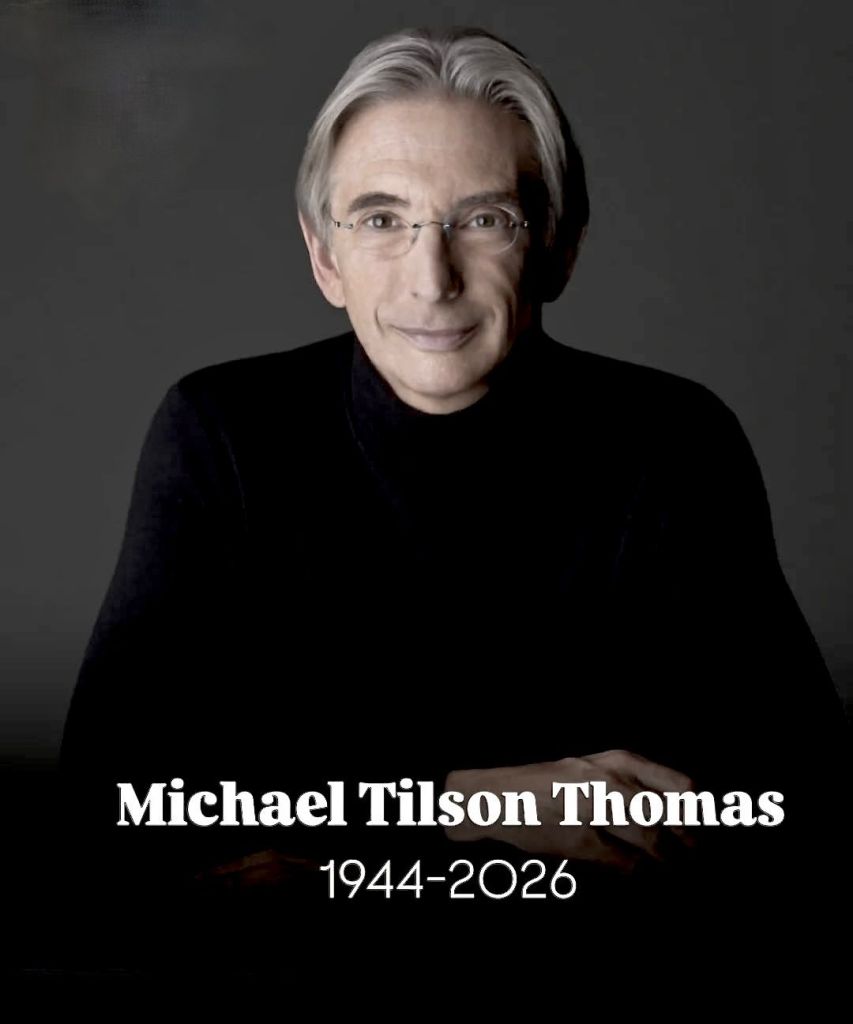
“A coda is a musical element at the end of a composition that brings the whole piece to a conclusion. A coda can vary greatly in length. My life’s coda is generous and rich.”
In these past five years, each of his appearances felt less like the confirmation of a miracle than the quiet triumph of will over the body’s fragility—the living proof of an irreducible urge to exist and, above all, to remain in service to music. In his increasingly delicate figure there lingered a kind of luminous defiance, an almost mischievous insolence before time itself. And now, that miracle gathers inward, with the calm of what cannot be otherwise, as if fulfilling the long-dreaded shape of a “chronicle of a death foretold.”
Obituaries multiply—meticulous, expansive, grateful. Portraits and remembrances attempt, each in their own way, to circumscribe the magnitude of the man the world came to know as MTT: Michael Tilson Thomas—composer, conductor, pianist, teacher, visionary; an architect not only of sound but of institutions; a musician in the most essential and unqualified sense.
American, and yet indelibly Californian—formed by a landscape at once open, radiant, and liminal—the same horizon that welcomed his beginnings now receives his farewell. Heir to the theatrical lineage of the Thomashefskys, he bore the stage in his very marrow: gesture, voice, and word transfigured into music. His studies with Ingolf Dahl instilled rigor and clarity, but it was his near-initiatory proximity to guiding spirits such as Igor Stravinsky, Aaron Copland, and, above all, Leonard Bernstein that ultimately shaped his artistic voice—one in which intellect, curiosity, theatrical instinct, and an extraordinary communicative power converged.
His passage from Wunderkind to venerable master seemed less a transformation than a natural unfolding, sustained by decades of tireless devotion and an unwavering allegiance to music as a way of being. Even in his final years, confronting with lucidity and courage the brain tumor that would claim him, his presence on the podium assumed an almost emblematic force: to conduct was, for him, an act of resistance, a declaration of meaning.
The orchestras that now mourn him are many, and of no small consequence: Boston, Buffalo, London, Los Angeles, New York—and certainly, the San Francisco Symphony, with whom he forged a relationship of a quarter century. There he shaped not only a sound, but an identity, a living community—an organism capable of conversing with tradition without relinquishing the urgency of the present.
For if one thread runs through his life’s work, it is this dual fidelity: to memory and to possibility. He was an indefatigable advocate for the music of his time, a champion of emerging voices, yet equally a passionate interpreter of the American canon, illuminating with renewed clarity figures from Charles Ives to John Cage. In his repertoire, experiment and inheritance did not contend—they coexisted, freely, without hierarchy.
And at the heart of that constellation stood Gustav Mahler. Not as an immediate conquest, but as a lifelong conversation, deepened with each return. Symphony by symphony, he drew closer to that vast terrain where the human condition expands toward the cosmic. If his life partner Joshua was his grounding presence, Mahler became his other fahrenden Gesellen—a companion in the endless journey.
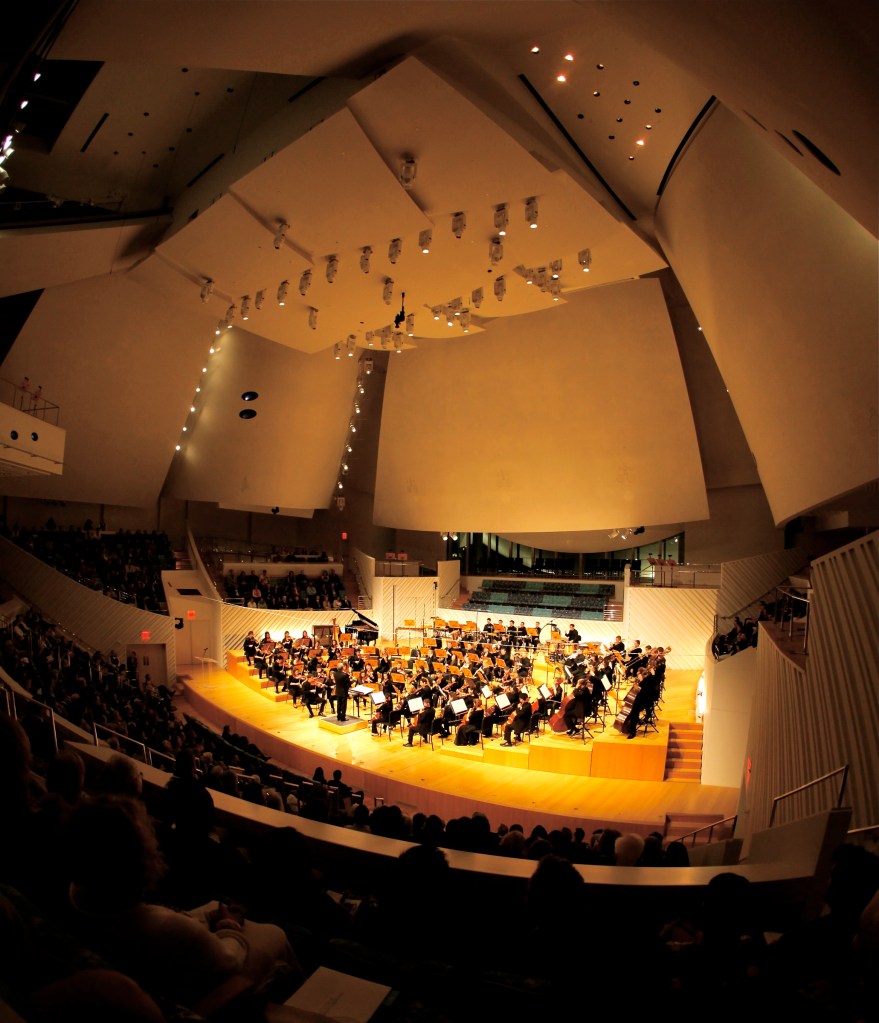
New World Symphony en el New World Center – foto: Tomas Loewy
Yet perhaps his most enduring legacy resides not in performance, nor in the breadth of his recordings, nor even in his own compositions, but in his gift for imagining and enabling futures—in his singular, beloved only child: the New World Symphony. In Miami Beach, guided by something akin to prophetic intuition, he founded an institution that transcends the notion of just an America’s musical academy: it is a laboratory of ideas, a space for formation and transformation, a bridge between generations.
There, his artistic credo takes form, where the imprint of Leonard Bernstein—mentor, reference—projects itself forward and is renewed, not as mere inheritance but as a living impulse. To create an oasis where others saw a desert was his wager. And the spring he brought forth has not ceased, nor will it cease, to flow. It will outlive him.
Thus, his passing is but the closing line of a story long anticipated, one whose conclusion leaves the essential untouched. His presence endures—in every young musician who discovers a path, in every work that resounds with renewed light, in every listener awakened to a deeper mode of hearing; in that hall shaped to his measure, in his likeness, by Frank Gehry.
He will remain in that constant flow of music that does not cease, but transforms and continues—like a fertile echo, offering solace to those of us who had the privilege of hearing him and accompanying him, even from afar, for so long.
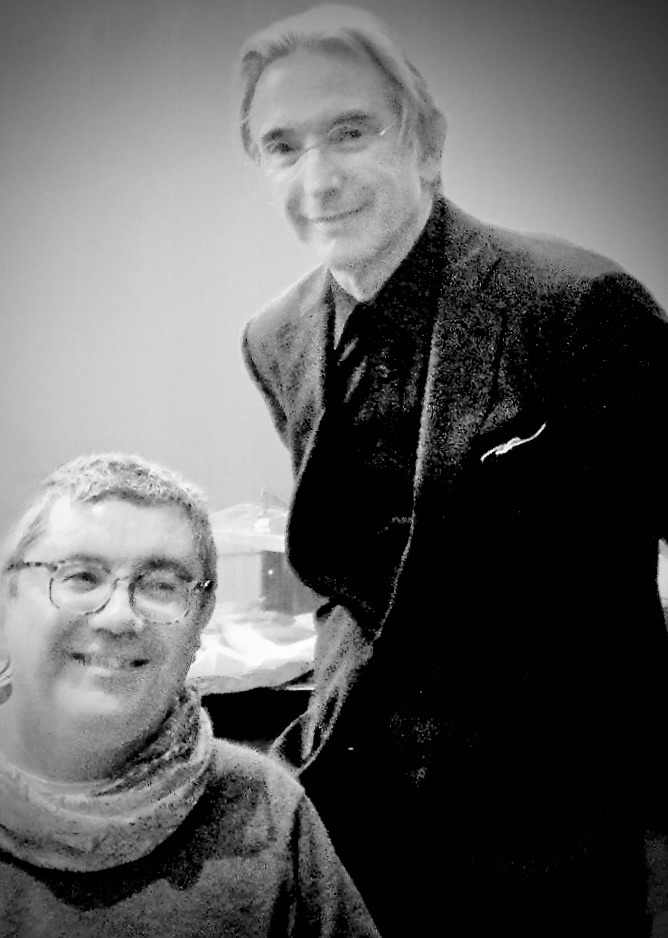
*Michael Tilson Thomas. December 21, 1944, Los Angeles – April 22, 2026, San Francisco
