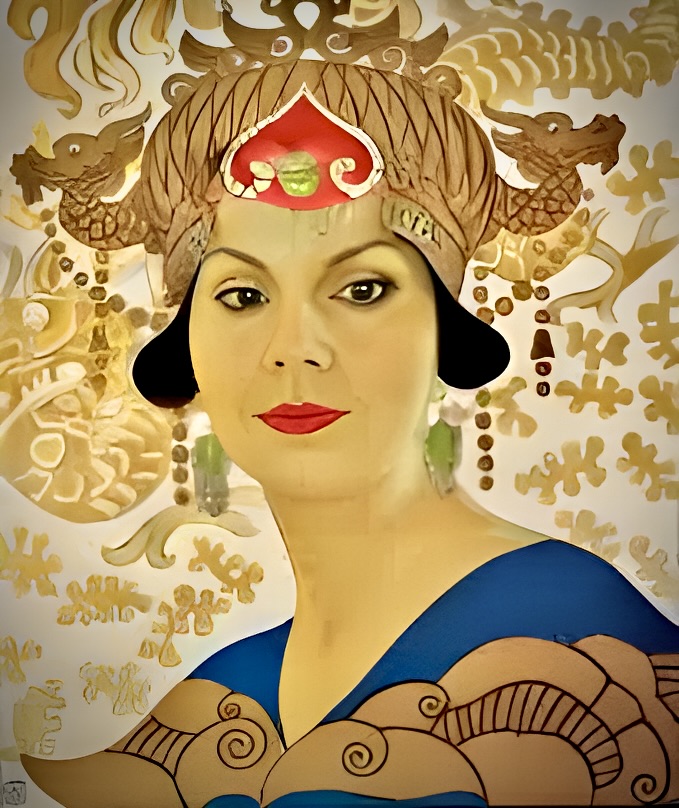
Puccini’s Ice Princess Turns 100th at FGO
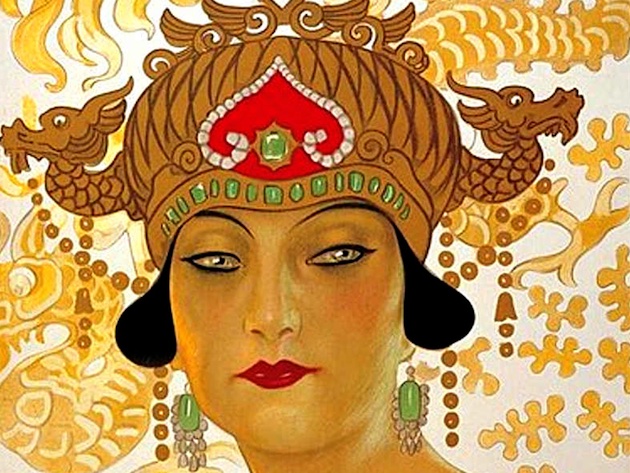
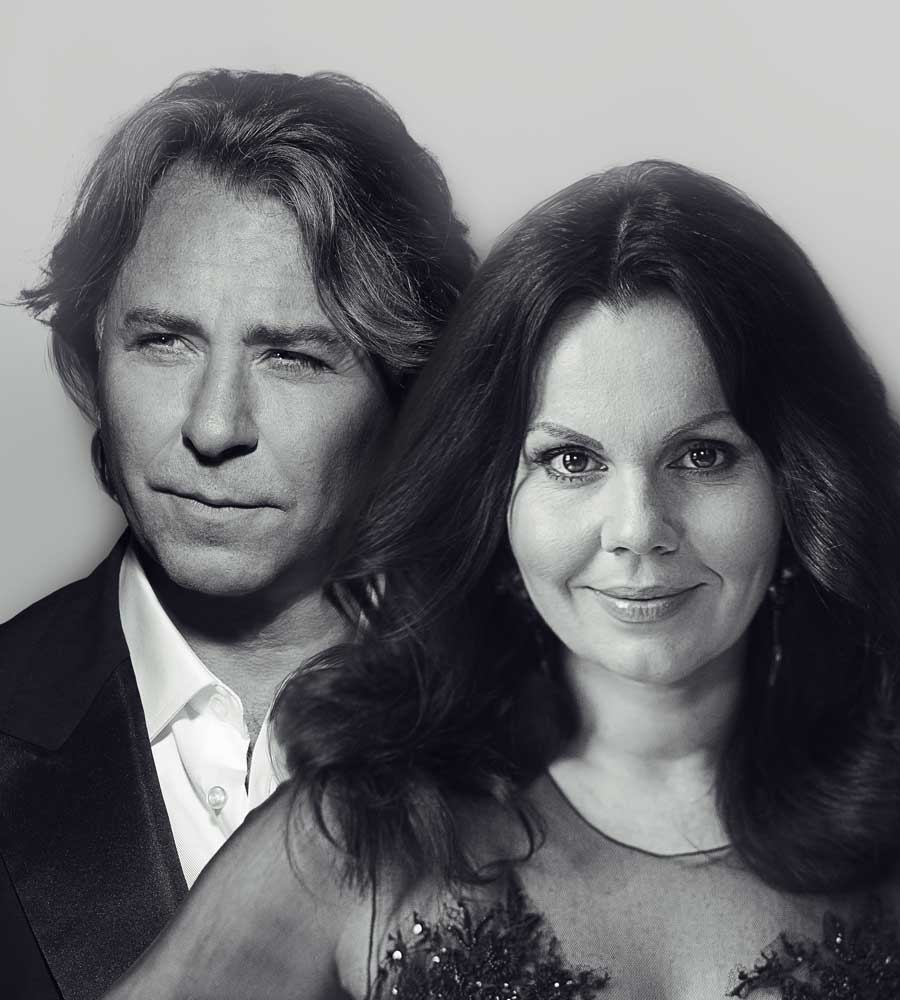
The Polish soprano Aleksandra Kurzak, long celebrated as an incandescent Liu, now steps into the glacial terrain of Turandot opposite her real-life Calaf, the divo Roberto Alagna, in Miami with Florida Grand Opera. For a singer whose career has been built on agility, enamelled phrasing, and a bel canto line of refined musical intelligence, Turandot represents not merely a change of repertory but a tectonic shift. Puccini’s writing demands not only amplitude but sonic mass, not only altitude but a steely projection capable of riding an orchestra in perpetual combustion. Kurzak, who has husbanded her instrument with strategic care, now confronts the test of converting lyricism into authority without sacrificing sheen; of turning the purity of her middle register into dramatic edge; of making ice not a wall but a prism.
Alagna’s presence adds an additional layer of fascination—and risk. Real-life couples on the operatic stage have always tempted alchemy: private chemistry can ignite a performance or unsettle it. Calaf is no accommodating partner; he is a conquering tenor who arrives late and claims the evening with an aria the audience awaits as if it were a national anthem. In such a context, Turandot must prevail not through sheer decibel output but through magnetism. The true contest is not of volume but of focus: who concentrates the theater’s energy when both voices are pushed to the edge of endurance.
For Florida Grand Opera, the venture carries symbolic weight as well. To present a Turandot in evolution—not yet ossified into the category of “steel-plated dramatic soprano,” but in transition—restores to the role its element of danger. Turandot should not sound comfortable; she should sound wrested into being. If Kurzak can make the opening cruelty breathe, and shape the final duet into something more than capitulation—into an audible transformation—she will have done more than add a heavyweight title to her résumé. She will have negotiated her own treaty with altitude.
In Turandot, Giacomo Puccini created the most glamorous ice storm in the repertory. The role lasts scarcely twenty minutes; the preparation can consume a career. Turandot is less a character than a professional hazard — the vocal equivalent of Everest, except the sherpas are offstage and the avalanche arrives in B major. Sopranos approach her the way hedge-fund managers approach volatility: with terror, bravado and the firm belief that this time it will be different.
Puccini places his princess among operatic absolutists — cousin to Abigaille, spiritual sparring partner of Brünnhilde and Elektra — but with a modern twist: she must dominate an opera she barely inhabits. By the time she appears halfway through Act II, chorus and orchestra have already staged a sonic coup. Then the tenor seizes his aerobic victory lap in “Nessun dorma,” planting a flag in her territory while the audience hums along. After such a theft, no self-respecting despot would sleep. Let no one sleep, indeed. The princess must reclaim the evening and remind everyone whose riddles these were in the first place.
Biographers, scenting scandal, have long connected Turandot’s cruelty with Puccini’s domestic melodrama. The composer, who made a mint tenderizing sopranos in the names of Mimì, Suor Angelica, Manon and Butterfly, here seems to flirt with revenge. The innocent Liù bleeds; the audience weeps; the ice princess is left holding the crown and none of the sympathy. It is a neat inversion. If opera is therapy, this is the session where the therapist calls in sick.
Puccini died in 1924, leaving the opera unfinished just after Liù’s suicide — a composer overcome by his own orchestration. At the premiere at Teatro alla Scala, conducted by Arturo Toscanini, the music stopped where Puccini’s pen had. Two divas immediately circled the vacancy. Rosa Raisa claimed Milan; Maria Jeritza secured the Metropolitan Opera. Puccini had indiscreetly confessed that he “dreamed of Jeritza in Turandot,” which is the sort of remark that keeps soprano rivalries gainfully employed. The empire was divided. Diplomacy prevailed. No riddles required.
It was 1926, one hundred years ago.
The annals of those tempted by early fame through Turandot read like a cautionary fairy tale. At twenty-six, Maria Callas hurled herself at the role twenty-three times, a volcanic instrument coiled like a tiger in couture. Her reign lasted scarcely a decade, yet its mythology grows annually. On her 1954 Puccini arias disc, she conjures the daughter of the legendary King of Turan with astonishing vividness, summoning desert ancestry and the Persian tale recorded by Nizami Ganjavi in The Seven Beauties. The story wandered from oral tradition through the salons of François Pétis de la Croix, the pen of Friedrich Schiller, the theatrics of Carlo Gozzi, the irony of Ferruccio Busoni, and even the political bite of Bertolt Brecht — before reaching its supreme musical chronicler in Lucca. Puccini’s Turandot — and without the final “t,” as the imperial Dame Eva Turner would fiercely remind you — is the version that stuck.
Then came the Valkyries. And the supreme Birgit Nilsson installed central heating in the ice palace. From the late 1950s on, her top notes arrived like precision-guided missiles. “Isolde made me famous,” she liked to say, “but Turandot made me rich.” Paired with the combustible Franco Corelli, she endured rumors of onstage neck-biting and responded with the driest of Scandinavian punch lines, informing the Met that she had contracted “rabies.” Even glaciers, it turned out, can smirk.
Others tested their altitude tolerance. Joan Sutherland ventured the part amid predictions of doom and produced a recording of disconcerting authority. Montserrat Caballé offered velvet where others supplied steel. A Slavic brigade — Ghena Dimitrova, Eva Marton, Maria Guleghina — treated the score as competitive weightlifting. Meanwhile, Luciano Pavarotti turned “Nessun dorma” into a global ringtone, tilting the opera ever further toward tenor hegemony. The princess may decree; the tenor cashes the royalties.
Recent claimants — Christine Goerke, Tamara Wilson, Anna Pirozzi, Sondra Radvanovsky, Anna Netrebko, Asmik Grigorian — have negotiated their own treaties with the ice.
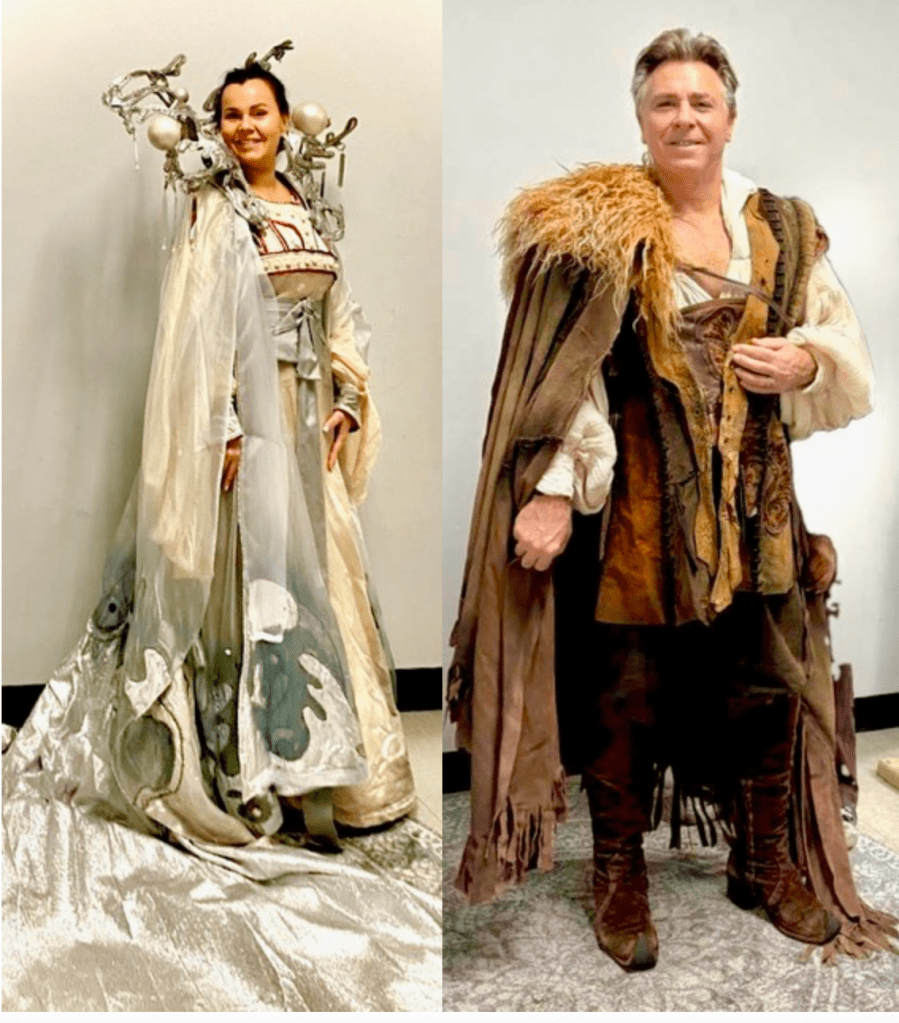
Kurzak and Alagna in rehearsal at FGO
As ever, the public awaits the three riddles. But the greater riddle is why anyone volunteers. Perhaps because every soprano, at some point, wishes to be both supplicant and sovereign — to plead like Calaf and command like Turandot. The leap is vertiginous, the applause intoxicating, the risk considerable.
Nilsson, who knew a thing or two about surviving at altitude, offered advice fit for both mountaineers and monarchs: stay close to the ground. If you fall from such heights, at least the landing is shorter. In opera, gravity is the only force more reliable than ego.
FLORIDA GRAND OPERA INFORMATION
MIAMI
Adrienne Arsht Center for the Performing Arts
of Miami-Dade County / Ziff Ballet Opera House
Mar 7, 2026, at 7:00pm
Mar 8, 2026, at 3:00pm
Mar 10, 2026, at 8:00pm
FORT LAUDERDALE
Broward Center for the Performing Arts / Au-Rene Theater
Mar 26, 2026, at 7:30pm
Mar 28, 2026, at 7:30pm