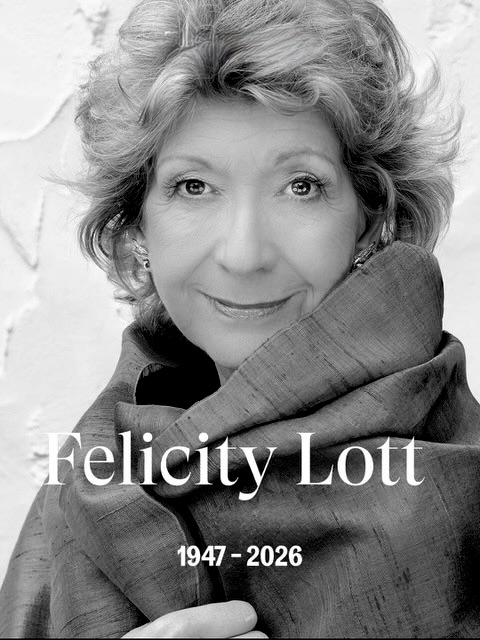
The Incomparable Charm of Dame «Flott»
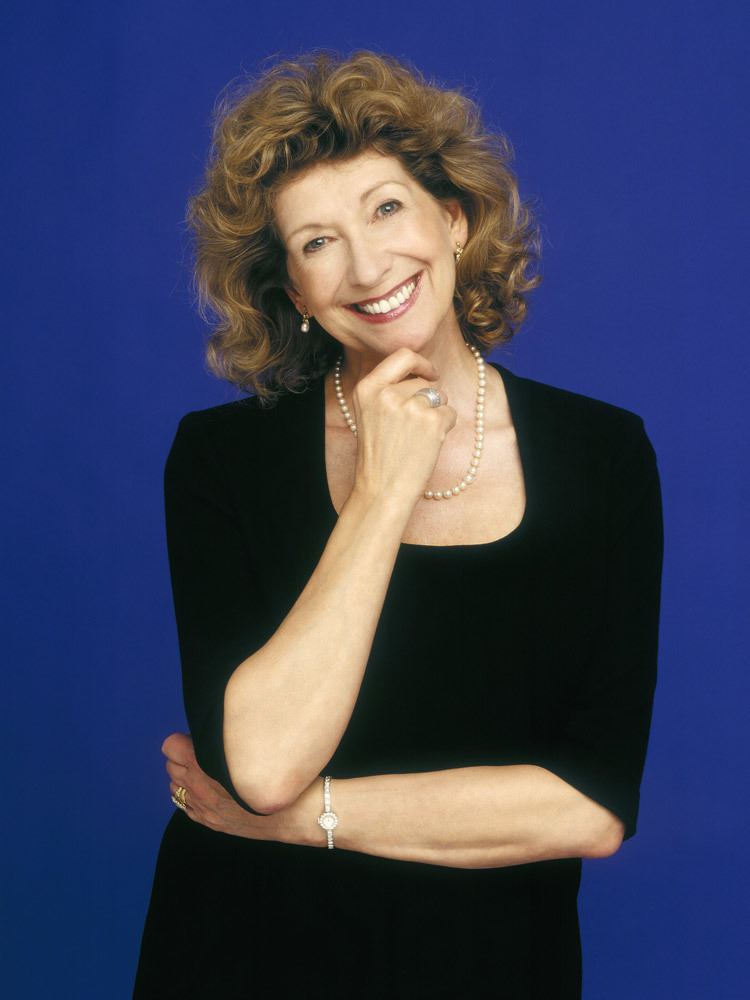
Today, the world of singing feels a little lonelier.
A Dame has left us. Not merely a great singer, but one of those exceedingly rare presences who seemed to belong to a more civilized age: an age of elegance, intelligence, restraint, and humanity. An artist incapable of vulgarity, incapable of affectation, incapable of betraying music in the pursuit of spectacle.
Dame Flott is gone.
And yet, there are artists whose passing arrives with noise and public thunder, while others leave behind a quieter devastation — a silence of far greater depth. Hers belongs to the latter: a velvet silence, the lingering resonance of a perfectly shaped phrase slowly dissolving into the air.
She never needed excess. Never needed hysteria, exaggeration, or theatrical self-display. Her art was built upon intelligence, poise, emotional truth, and a kind of spiritual refinement that has become heartbreakingly rare. She represented what singing can become when technique is joined to culture, sensitivity to discipline, and beauty to honesty.
Perhaps she was not “unique” in the superficial sense in which the word is so casually used today. She did not seek to reinvent singing or overwhelm audiences through eccentricity. And precisely there lay her singularity. She embodied, almost perfectly, the ideal of the great English lyric soprano: elegant without stiffness, cultivated without pretension, refined without coldness, luminous without artifice.
She possessed that rarest quality of all: she made the world feel at ease in her presence.
Everyone who heard her felt something strangely intimate — familiarity. Every listener felt like a friend of Flott. She was the sort of lady with whom one would have loved to take tea, with sandwiches and scones, naturally.
In Mozart, Schumann, Strauss, Fauré, Poulenc, Wolf, Messager, Elgar, and Britten, she left behind a legacy of intelligence, exquisite taste, and genuine emotion.
In French repertoire she could rival Crespin, Norman, even Yvonne Printemps. Though in truth, she was neither rival nor comparable to anyone else: she was something entirely her own, as all true artists must be. She was, perhaps, the most French of British sopranos.
In Strauss she stood apart from Schwarzkopf, Della Casa, and Janowitz. For true artists are not born to resemble others, but to reveal a different truth. Her Countess Madeleine and her Marschallin possessed a profoundly moving humanity — perhaps less imperious, but infinitely warmer, more vulnerable, more alive.
It is hardly surprising that Carlos Kleiber treasured her so deeply.
In her he found something that now seems almost extinct: natural aristocracy. Not social aristocracy, but aristocracy of spirit. That ability to express everything without underlining anything. That elegance which never needs to announce itself in order to exist.
And then there was the voice.
A silver voice — never aggressive, never vain, never heavy-handed. Transparent yet warm, capable of those iridescent pianissimi that seemed less sung than breathed into existence. A voice that did not conquer the listener through force, but rather enveloped them gently until resistance became impossible.
And then there were the recitals.
What extraordinary musical intelligence. What flawless taste in programming. Every song seemed to converse secretly with the next; every recital unfolded with architectural inevitability and emotional subtlety. There was no vanity in her choices, only thoughtfulness, imagination, and profound respect for music itself.
Even her comic gifts possessed distinction. Her now legendary “Cats’ Duet” with her beloved colleague Ann Murray remains a masterclass in wit, timing, and charm. Few artists have ever managed to be genuinely funny without sacrificing elegance.
She had something in common with Frederica von Stade: that miraculous ability not merely to be admired, but deeply loved.
For there may be larger voices. There may be more sensational careers. There may be singers of greater dramatic force. But there are artists whose mere presence ennobles the art itself.
She belonged to that sacred category.
And so she will continue to be cherished by generations of listeners who still believe in honesty in singing, refinement without pretension, emotion without vulgarity, and good taste as a form of moral beauty.
And as long as there remains someone capable of being moved by a perfectly floated phrase, by a silver pianissimo suspended in time, or by the serene elegance of a truly civilized artist, her voice will remain with us: luminous, distinguished, and unforgettable.
Like all true ladies.
*Felicity Ann Emwhyla Lott, soprano, born 8 May 1947; died 15 May 2026