NWS+MCB+CO= In music, too, unity is strength
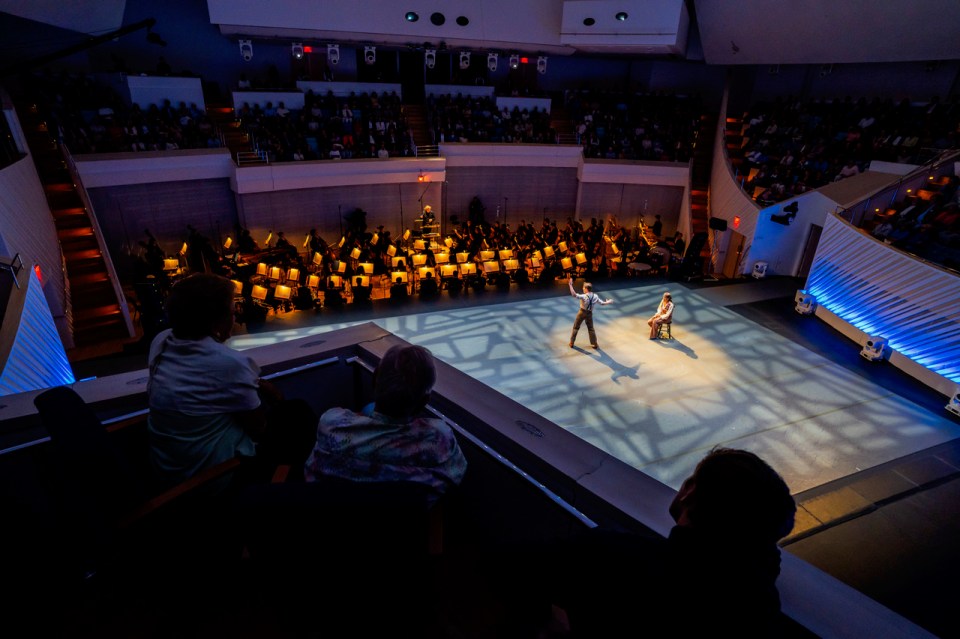
Two evenings bore eloquent witness to the power of collaboration: when distinct institutions converge, a city’s artistic pulse is not merely sustained—it is elevated: the NWS -America’s Orchestral Academy- the MCB- the local ballet company- and a great visiting orchestra—faithful to its winter pilgrimage—joined forces to remind us that art, at its finest, is a shared endeavor.
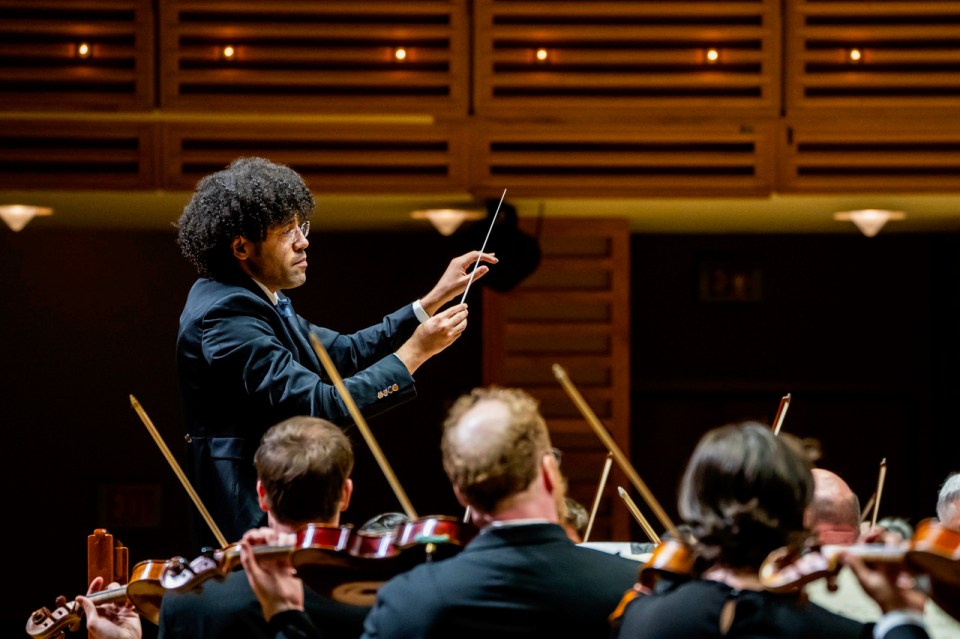
The Cleveland Orchestra, joined by the fellows of the New World Symphony, brought its residency to a close with a program shaped like a slow-burning arc—stretching from the hushed, pastoral world of Sibelius to the primal blaze of Stravinsky. At its helm, Venezuelan conductor Rafael Payare made a debut of striking authority. His reading, rich in expressive weight, revealed an artist of growing international stature: one who wields color with finesse and gesture with an almost theatrical urgency, at once disciplined and deeply personal.
In The Swan of Tuonela, Sibelius’s most enigmatic meditation, Payare chose restraint over spectacle. The music seemed to hover, suspended in a stillness both dense and luminous, as the English horn’s solitary voice drifted across an orchestral landscape of muted shadows. Rather than cloaking the work in mystery, he illuminated its inner architecture, tracing its contours with uncommon clarity. In the Violin Concerto, Sergey Khachatryan offered precision and poise, his lines cleanly etched, his tone controlled, especially in the inward lyricism of the Adagio. Yet something remained just out of reach: a spark of risk, a sharper dramatic edge that might have transformed mastery into revelation.
After intermission, The Rite of Spring erupted—not as a provocation, but as a force of inevitability. Here Payare found his natural terrain. Rhythms struck with clarity and purpose, textures layered without blur, each climax placed within a broader, carefully shaped design. The fusion of the Cleveland Orchestra’s seasoned depth with the youthful vigor of the New World Symphony expanded the sonic canvas without sacrificing detail. Gone was any temptation toward mere impact; instead, Payare sculpted the score with architectural insight, allowing its violence and vitality to unfold organically. More than a century after its scandalous birth, Stravinsky’s music still felt dangerous—no longer shocking, perhaps, but inexorable.
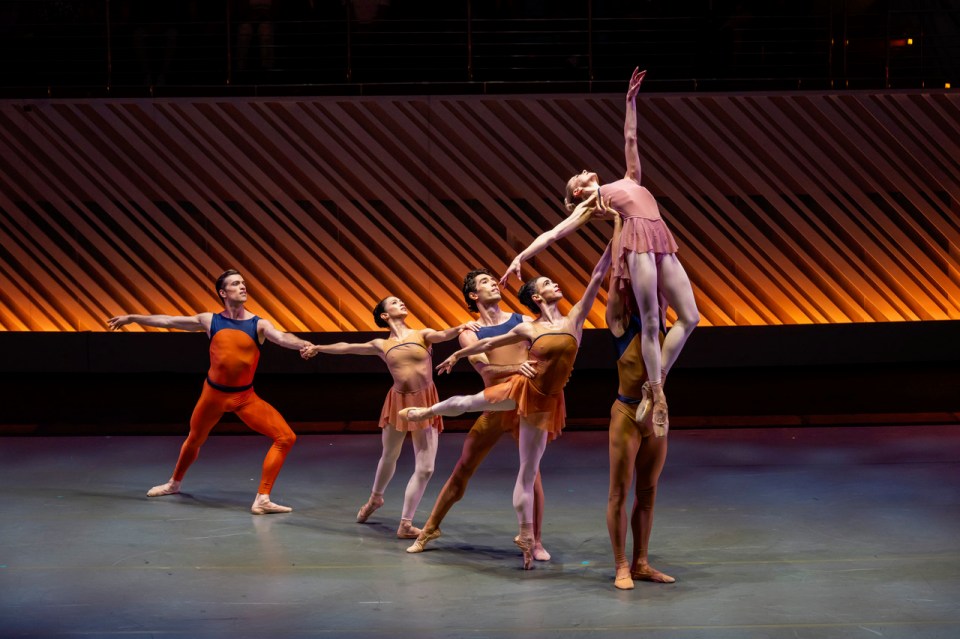
The second program, born of collaboration between the Miami Beach New World Symphony and Miami City Ballet, turned toward dialogue—between sound and movement, tradition and invention. American Choreographic Odyssey sought to map this terrain, embracing both its richness and its fractures.
It began with Iris by Sarah Kirkland Snider, a work of expansive lyricism and luminous orchestral weave. Claudia Schreier’s choreography responded with a neoclassical clarity, tracing the music’s contours without overshadowing them. The dancers’ precision and unity lent the opening a quiet assurance. In Hollywood Version to Polymnia, Michael Abels conjured a rhythmically charged, cinematic pulse, met by Pam Tanowitz’s choreography—crisp, kinetic, and finely attuned to its musical counterpart.
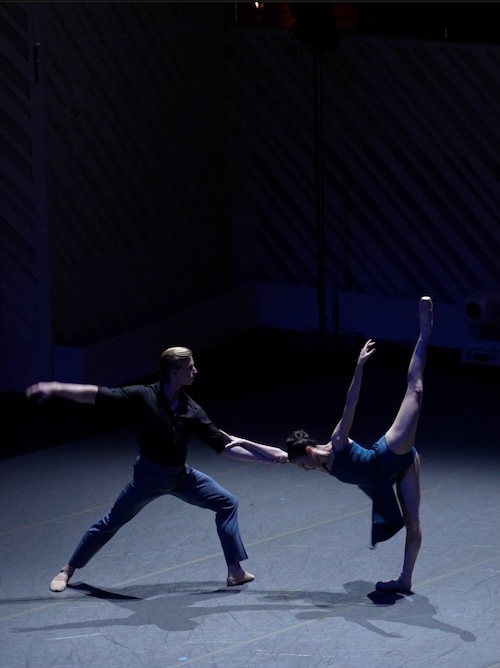
With Could We Be Quiet by Kevin Puts, a more intimate language emerged. Brian Brooks shaped a pas de deux of hushed intensity, where Macarena Jiménez and Chase Swatosh moved as if in shared breath, their dialogue fluid and unforced—one of the evening’s most affecting moments. In Lamentations by Carlos Simon, Jamar Roberts turned inward, offering a choreography steeped in raw emotion, a quiet meditation on loss.
The first half culminated in Dance Measures by Jennifer Higdon, a vibrant world premiere (as the previous four, all commisioned by NWS) set by Tiler Peck. Here, rhythm and motion intertwined with exuberant clarity, orchestra and dancers moving as one. Throughout, Stéphane Denève’s direction anchored the evening with poise, balancing pit and stage with unfailing sensitivity in a space that proved remarkably adaptable.
The second half, dedicated to Jerome Robbins, cast a backward glance—one that revealed, perhaps more than intended, how deeply contemporary works remain indebted to their lineage. Like Balanchine, Robbins shaped the very language of American ballet, and his shadow lingered over much of what preceded him. Yet here, his voice rang clear: versatile, theatrical, alive to both the elegance of ballet and the vernacular pulse of musical theater specially under the spell of Leonard Bernstein and Morton Gould’s music; for instance, in Free Play, these worlds converged seamlessly.
Scenes from West Side Story and Gypsy summoned another era, their dramatic economy and theatrical instinct as potent as ever. The pas de deux from Fancy Free, danced by members of Houston Ballet, shimmered with charm and precision, while Passage for Two from NY Export: Opus Jazz added a vivid audiovisual dimension, performed by artists of New York City Ballet.
The evening closed in a lighter vein, with I’m Old Fashioned – The Astaire Variations and Billion Dollar Baby, where wit and elegance took center stage, each dancer contributing flashes of individuality within the collective whole.
In the end, American Choreographic Odyssey did not seek perfect unity. Its strength lay in its plurality, in the way it mirrored the layered, multicultural fabric of American art itself. Not every thread aligned, but together they formed a tapestry of undeniable vitality. It is an experiment worth repeating, refining, and deepening—a testament to what can emerge when two young, world-class institutions, fortunately rooted among us, choose to create together.