Goldmund Quartet: Intensity and Incandescence
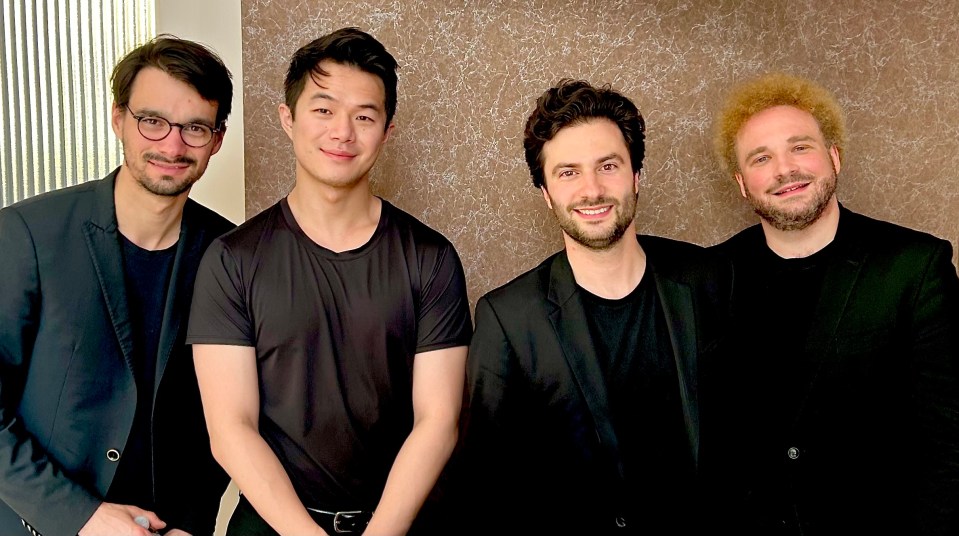
The Goldmund String Quartet made a impressive Miami debut with Friends of Chamber Music of Miami, proving itself not merely a rising young ensemble, but a guidepost for the future of chamber music. Originating in Munich, the quartet—Florian Schötz (violin), Pinchas Adt (violin), Christoph Vandory (viola), Raphael Paratore (cello)—featured a key change for this tour: Lun Li on first violin, commanding her 1735 Stradivarius “Samazeuilh” with confident artistry.
Precision met incandescence as the ensemble transformed every measure into expressive discourse. Intellectual rigor and visceral commitment fused seamlessly, producing performances of remarkable cohesion. Each instrument retained its individuality while contributing to a homogenous, resonant timbre. The music was not merely performed—it was revealed, its hidden tensions unraveled, its narrative flowing with natural authority.
Brahms’ String Quartet No. 2 in A minor combined Romantic complexity with lyrical beauty. Paying homage to Schubert and Joseph Joachim’s “frei aber einsam” (“free but lonely”), Brahms balanced melancholy with moments of joy. Clarity, space, and intimate expressiveness prevailed, enriched by gypsy-inflected vitality. Counterpoint, in Brahms’ hands, became a dynamic interplay of musical lines, demonstrating the ensemble’s technical and interpretive mastery.
The program’s centerpiece, Schubert’s Death and the Maiden, String Quartet No. 14 in D minor, D. 810, tested both performers and audience. Composed during a period when Schubert faced illness and the awareness of mortality, the quartet draws its emotional core from the Lied quoted in the second movement. For the ensemble, this work has been essential since its founding in 2009, returning to it with increasing experience and maturity; they have even recently recorded it along with arrangements of other Schubert lieder.
The Goldmund’s interpretation, nearly orchestral in vigor, suggested not only terror but inevitability, intensified by dynamic shifts executed with millimetric precision. The music did not illustrate death—it embodied it. The first movement’s fatalistic urgency and densely layered soundscape highlighted the quartet’s meticulous control, while the Andante con moto and Scherzo balanced austerity, lyricism, and rhythmic drive, hinting at Schubert’s fascination with mortality and the supernatural. From the strictest austerity emerged variations in which each instrument revealed its character with subtle but significant echoes of Erlkönig.
As an encore, they offered Augenstern from Dahoam, enchanting arrangements of Alpine and Bavarian melodies.
A special mention goes to the use of the Stradivarius instruments known as the “Paganini Quartet”—once owned by the Italian virtuoso and played by Goldmund since 2019 on loan from the Sasakawa Music Foundation of Japan. These include the violins “Comte Cozio di Salabue” (1727) and “Desaint” (1680), the viola “Mendelssohn” (1731), one of only twelve preserved Stradivari violas, and the cello “Ladenburg” (1736), among the last instruments crafted by the master before his death in 1737. While their timbral contribution is undeniable, the interpretation made clear that ultimate sonic excellence lies in the performers’ musical intelligence and technical discipline.
With this performance, the Goldmund Quartet concluded its North American tour offering interpretations that transcend mere virtuosity. In a highly competitive chamber music landscape, the ensemble reaffirms its position as one of the most lucid and consistent exponents of the present day.
A resounding “Bravo” to Friends of Chamber Music of Miami, that brought them to the much-needed chamber music scene in Miami.
UPCOMING EVENTS
https://www.miamichambermusic.org/events
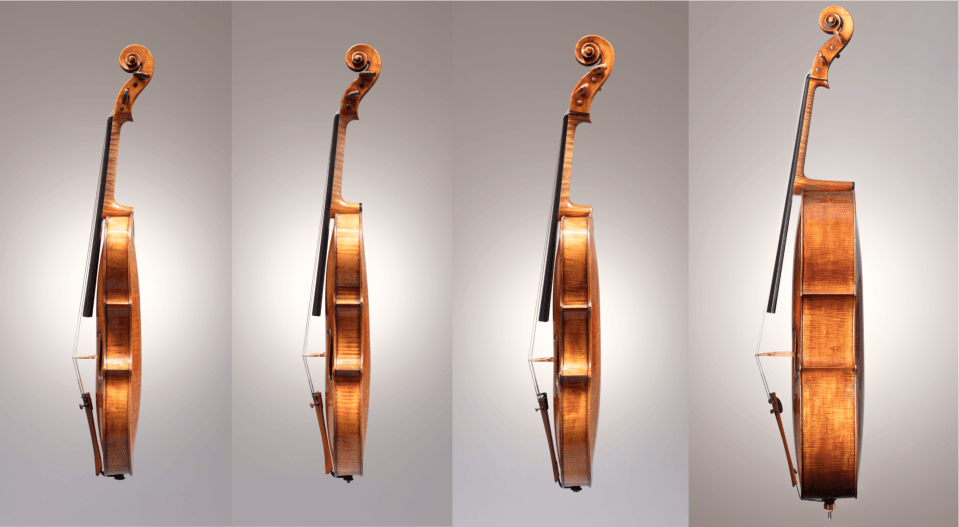
Stradivari’s Paganini Quartet. Photo courtesy of Nippon Music Foundation
