Stars at the Arsht for Memorable Nights
Two concerts in one week at the Adrienne Arsht Center for the Performing Arts offered a pointed reminder that reports of classical music’s fragility are often exaggerated — provided the right artists are in the room.
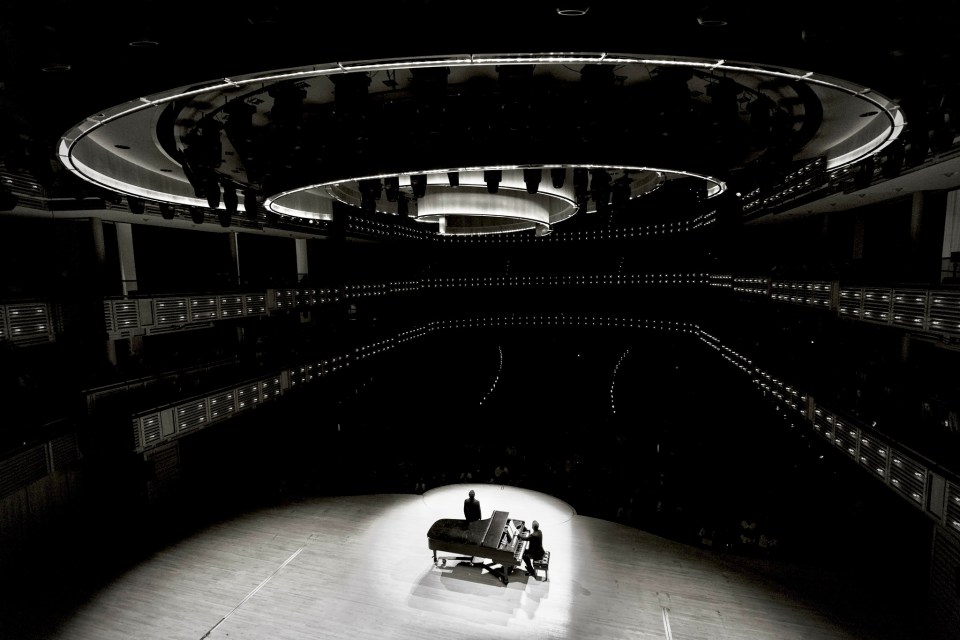
On Sunday, the Peruvian tenor Juan Diego Flórez walked onto the stage of the Knight Auditorium to a sold-out house, a sight that would have startled anyone persuaded that the vocal recital is a dying form. In Miami — a city that once heard the world’s major singers with regularity — such evenings now feel less routine, more like events.
Two evenings, two different traditions — the solitary singer and the symphonic collective — and in both, a persuasive case for continuity over nostalgia.
Flórez’s recital programs are carefully engineered. The first half is typically devoted to bel canto — Gioachino Rossini, Vincenzo Bellini, Gaetano Donizetti — and French lyric repertory; the second moves toward zarzuela and Spanish song; the encores broaden further, blurring the line between opera house and salon. It is a formula, yes, but one refined over three decades into a satisfying dramatic arc.
Now 53, and marking 30 years since his breakout at the Rossini Opera Festival in Pesaro, Flórez no longer projects the daredevil brilliance of his early career. The voice takes a moment to settle. But what remains is arguably more interesting: a polished, focused instrument; an unbroken legato; high notes still secure, if less brazenly flung; and, above all, stylistic judgment. He shapes a line. He knows when not to push. Beyond technique, he brings something rarer: musical intelligence, taste, and impeccable style. In the most exacting sense of the word, Flórez is a stylist.
He was partnered by the impeccable Vincenzo Scalera, who contributed piano solos by Bellini, Lecuona, and Godard. One missed, however, the tenor’s participation in the transcriptions of “Almen se non poss’io” and the celebrated “Berceuse” from Jocelyn, pages that seemed to long for his voice.
The opening group featured Rossini’s “Le sylvain” from Péchés de vieillesse and Bellini’s “La ricordanza,” whose nostalgic atmosphere foreshadows Elvira’s mad scene in I Puritani. The first half culminated in the prison scene from Roberto Devereux, shaped with emotional intensity, elegance, and not a trace of effect-seeking.
In the second half, zarzuela found in Flórez a singer of distinction. “Bella enamorada,” from El último romántico; “Suena, guitarrico mío”; and “Aquí está quien lo tiene,” from La alegría del batallón, reaffirmed a genre that requires artists of stature to reveal its true dimensions.
French opera followed with the melancholic “Ah! tout est bien fini!… Ô Souverain, ô juge, ô père” from Le Cid by Jules Massenet—written for the heroic Jean de Reszke—then a sovereignly lyrical “Salut! demeure chaste et pure” from Faustby Charles Gounod. The official program closed with a detailed and ardent “Che gelida manina” from La Bohème by Giacomo Puccini: a credible Rodolfo, edging toward spinto lyricism rather than pure tenor di grazia, signaling a carefully assumed repertorial evolution without loss of flexibility.
Then came the parade of encores. The audience expects gleaming high notes, and he obliged with “Pour mon âme” from La fille du régiment, its nine high Cs delivered without the athletic bravura of two decades ago, but with assurance and no accommodating transpositions. Guitar in hand, he turned to the Neapolitan song “I’ te vurria vasà,” followed by a Spanish-language medley including songs by his unforgettable compatriot Chabuca Granda—“La flor de la canela,” “Fina estampa”—and the inevitable “Cucurrucucú Paloma,” crowned with a long, floated head-tone high note. The celebration continued with “Amapola,” “La donna è mobile,” and “Nessun dorma” as a blazing finale.
Flórez looks youthful and in prime form. His voice is never forced, retaining its rounded warmth and sweetness of timbre. Charm, charisma, and unaffected simplicity allow him to win over an audience completely.
If Flórez’s recital was about cultivated control, the week’s second highlight was about collective force.
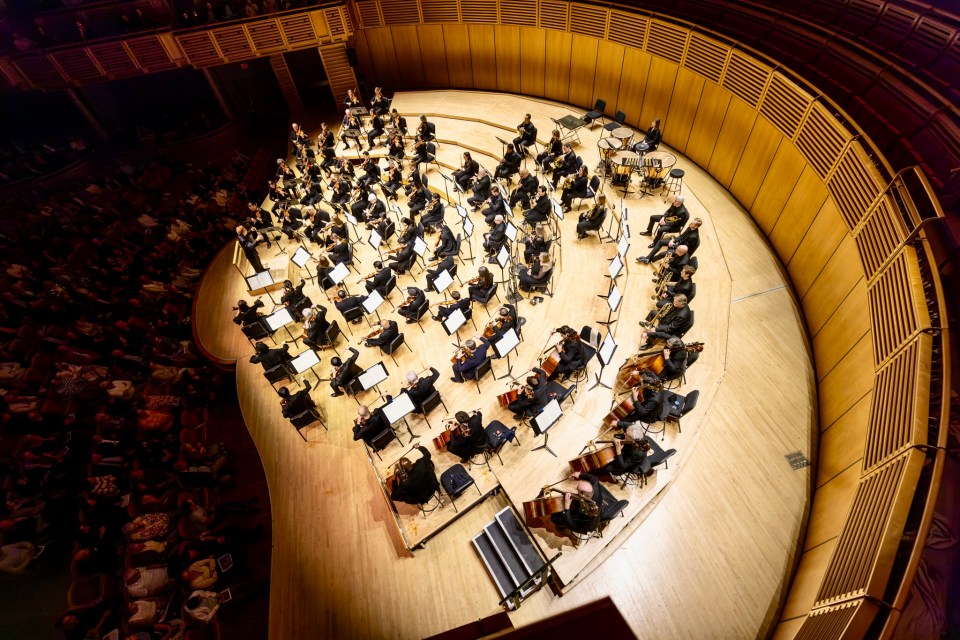
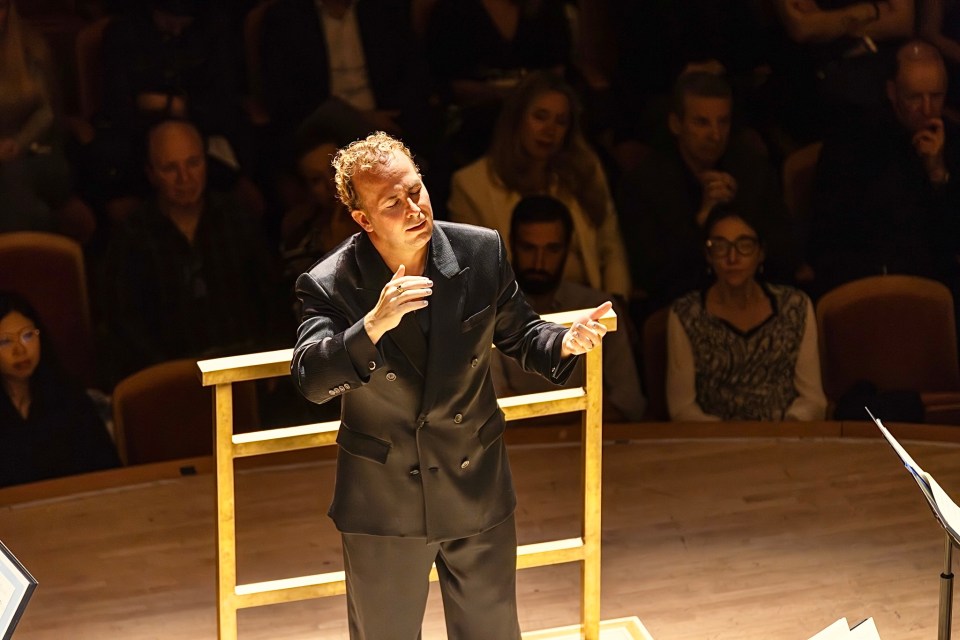
The Canadian conductor Yannick Nézet-Séguin made his long-awaited Miami appearance with the Philadelphia Orchestra, the ensemble he has led since 2012. Also music director of the Metropolitan Opera and the Orchestre Métropolitain, he has become one of the central figures in North American musical life.
It was a singular evening: one of America’s great symphonic traditions in full dialogue with the local public, and with a fullness surpassing previous distinguished visits.
Nézet-Séguin combines charisma, eloquent physicality, and immediate communication. More than a conductor, he seems a co-conspirator with his musicians—without baton or score, radiating the energy of a sports coach while maintaining total control. That complicity was palpable in a vivid, breathing account of the Third and Fourth Symphonies by Johannes Brahms.
He preserves the fabled “Philadelphia Sound,” shaped by Leopold Stokowski and Eugene Ormandy: dense, velvety strings; warm woodwinds; brass capable of nobility and blaze. The result was a Brahms of broad lines and generous breath—an enveloping sonic embrace.
Nézet-Séguin has said that Brahms is his favorite composer, and that affinity was evident in the freedom and urgency of his approach. The Third Symphony unfolded with striking continuity, as a single narrative arc in one big movement. One sensed the image of the Romantic wanderer before a surging river—perhaps the Rhine or the Elbe—in a landscape worthy of Caspar David Friedrich. More intimate than heroic, it flowed with naturalness, avoiding sentimentality and culminating in a conclusion of concentrated severity. The music flowed in long spans, less heroic proclamation than inward meditation.
That controlled impulsiveness returned in the Fourth, with barely a pause between the Andante moderato and the Allegro giocoso, as if they were sculpted from the same block. There was nostalgia and intimacy born of an apparently spontaneous—though meticulously shaped—chamber-like conception. A noble, powerful, vital Brahms moving inexorably toward its destiny, the orchestra responding as a unified, formidable body.
Particularly striking was the orchestra’s tonal cohesion: the strings’ velvety legato, the woodwinds’ chamber-like interplay, and brass climaxes that achieved brilliance without harshness. The performance exemplified a synthesis of institutional memory and contemporary dynamism.
A friend once used to say—back in the 20th century, almost prehistory—“So perfect I closed my eyes and it sounded like a record.” His comic but unfailing definition came back to me that night, when Philadelphia sounded “like a record.” Or better.