Jorge Mejía, finally his Concert in Miami, his City

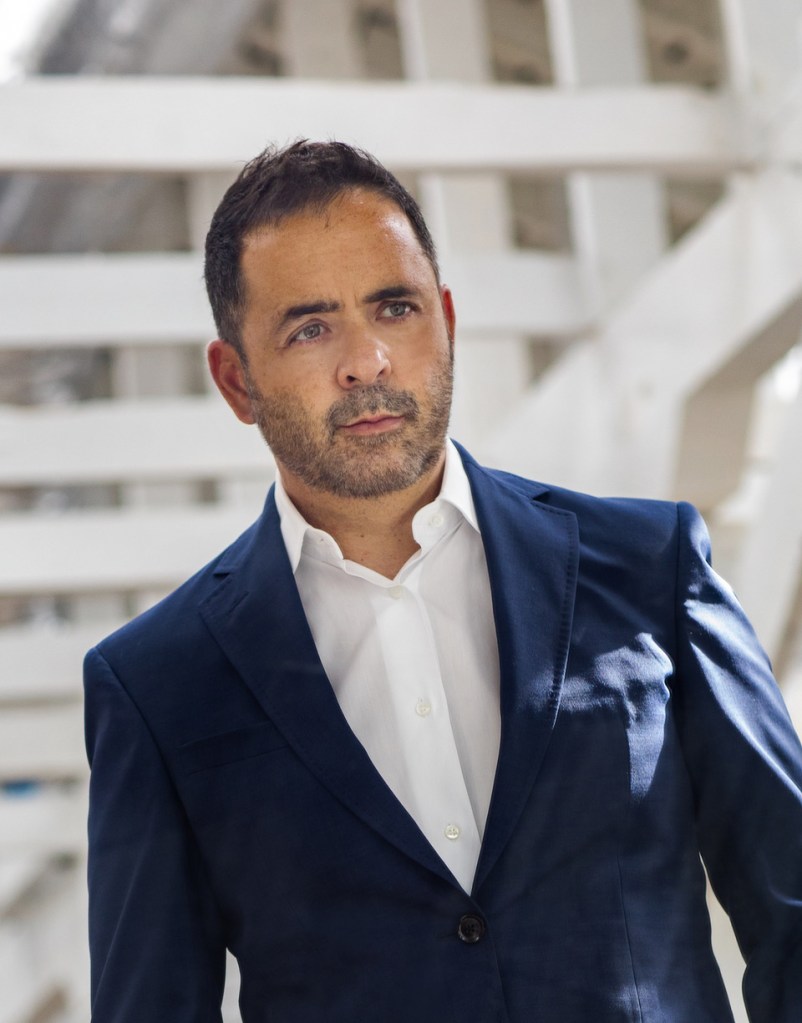
Without exaggeration, he is, by his own merit, one of Miami’s “distinguished citizens.” A composer, pianist, and also president and CEO of Sony Music Publishing Latin, Jorge Mejía embodies like few others the city’s hybrid DNA: born in Colombia, raised among the palm trees and highways of South Florida, shaped by both musical scores and ambition. A man who can discuss a Bach partita in the morning and close a music publishing deal in the afternoon without missing a beat.
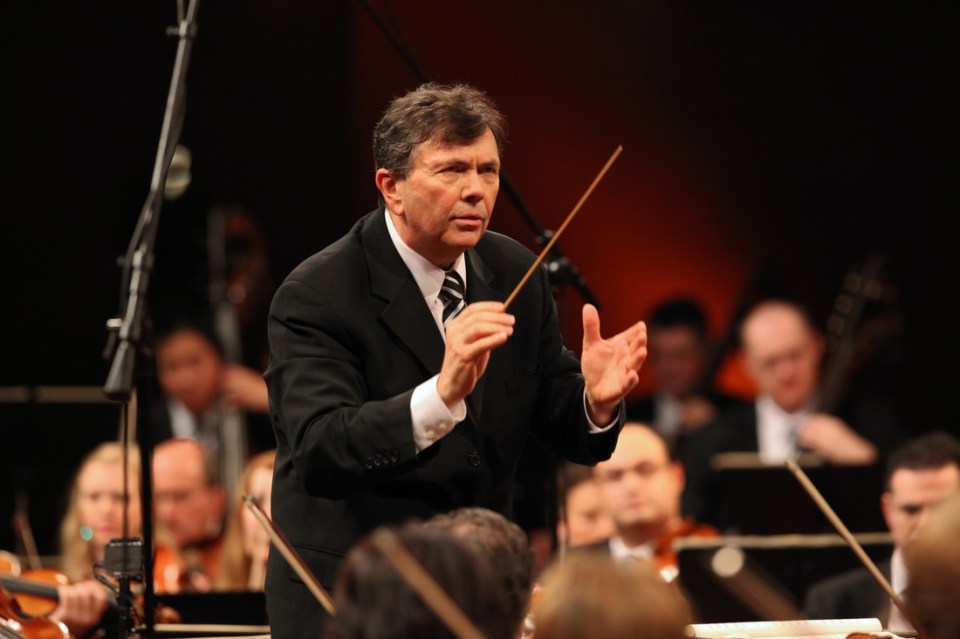
On April 26, at the Adrienne Arsht Center, the U.S. premiere of his piano concerto If These Walls Could Speak will take place. The performance will be led by the University of Miami orchestra—his alma mater—under the baton of Gerard Schwarz, with Mejía himself at the piano: composer, soloist, and narrator of his own universe. The program is rounded out with works by Maurice Ravel and Dmitri Shostakovich, in a dialogue that crosses centuries, ironies, and ways of surviving the noise of the world.
Mejía speaks as he plays: with precision, but without rigidity; with enthusiasm, but without solemnity. There is something in his way of telling stories that is part chronicler, part novelist. The origin of his concerto, for instance, does not stem from abstract theory or a formal commission, but from a building: Collins 221, a century-old structure in Miami Beach that, in his words, “asked to be heard.” It is not a metaphor: in his imagination, the walls truly speak.
The work unfolds in three movements, three characters, three short novels with a soundtrack. The first belongs to Irving Goldstein, a New Yorker who purchases the building sight unseen and, upon arrival, falls instantly in love with it. Three days later, the 1926 hurricane destroys his newly found happiness. Here, Mejía constructs an almost cinematic emotional swing: from idyll to devastation in a matter of measures.
The second movement introduces Sofía, a pianist turned nurse, the daughter of Cuban immigrants raised between boleros and Bach. World War II pushes her to enlist in the Red Cross; Miami Beach becomes a waypoint between exhaustion and uncertainty. At Collins 221 she meets Danny, a wounded soldier, and between them grows a love with an expiration date. The music becomes more intimate, more suspended, as if struggling to breathe; the cello asks and answers. The final note, Mejía says, “does not resolve”: it lingers, like so many farewells.
The third movement brings Elena, an actress of vanished fame who arrives in the 1980s intending to sell the inherited building. South Beach is boiling with real estate speculation, but Elena hesitates. In the apartment she discovers a piano, a score, a story that is not hers but begins to become so. And then the music—the very one we hear—turns into active memory, into resistance against forgetting.
The revelation comes with an almost mischievous smile: none of these stories actually happened. “I made them up,” Mejía admits, with the ease of someone confessing a small poetic crime. “But I believed them all.” And so do we.
Before arriving in Miami, the work had already traveled to cities such as Madrid, Montevideo, Medellín, and Quito. It was also recorded by the London Symphony Orchestra at the legendary Abbey Road Studios, that temple where icons like The Beatles left their mark on magnetic tape. “They played it as if they had known it their whole lives,” he recalls, still with a sense of wonder. The chain of connections—featuring names like Howard Herring, Catherine McDowell, and James Judd—sounds almost as improbable as the stories within the concerto itself, except that this one is true.
The Miami premiere is supported by key figures from the Frost School of Music, such as Shelley Berg, as well as institutional backing from the Arsht Center. The collaboration with Schwarz, long postponed, finally comes to fruition. “We always wanted to work together,” says Mejía—a phrase that, in the world of classical music, can mean decades of waiting.
In addition, two days before the Miami premiere, the work—recorded in London under the direction of Ricardo Jaramillo—will be released exclusively on Apple Music Classical on April 24, and on all other platforms starting May 8.
Sharing a program with Ravel and Shostakovich could intimidate anyone. Mejía opts for humor: “I feel like a chihuahua between two Great Danes.” But he quickly finds affinities, mentioning Alborada del gracioso, a piece by Ravel that also began on the piano before expanding into orchestral form, and which, like his concerto, revolves around a character.
His influences are as orthodox as they are unexpected. Johann Sebastian Bach is his daily compass; Frédéric Chopin, his intimate territory. But on the horizon also appear Radiohead and Sigur Rós, whose atmospheres, he says, seep especially into the third movement. For Mejía, the canon is not a museum—it is an ecosystem.
His creative philosophy avoids both the obsession with originality and the cult of tradition: “Each work is a new answer to the same question.” It is a phrase that might sound like an aphorism if it were not grounded in a constant practice of the craft.
Regarding the present musical landscape, his perspective is surprisingly optimistic. Never, he argues, has there been so much access to music or so many active creators at once. In the classical realm, he highlights the proliferation of languages and aesthetic diversity, mentioning with recent enthusiasm Elysium by Canadian composer Samy Moussa.
And within this expanding map, Miami occupies an increasingly visible place. Mejía recalls a city where classical music was once almost marginal; today, institutions like the New World Symphony coexist with regular visits from top-tier orchestras. The transformation of the Frost School, he says, has been “total.”
In times when the world seems tilted toward constant anxiety, Mejía offers a response that is not naïve, but necessary: “There have always been reasons to worry. Art must show a way forward.” In If These Walls Could Speak, that path is not drawn through speeches, but through memory: that of a building, its imagined inhabitants, and a city that—like music—never stops reinventing itself.
In the end, perhaps the most remarkable thing is not that walls can speak. It is that someone had the patience—and the ear—to listen.