Good Grand-Tradition: “There is no Music Comparable to Ours”
One of Miami’s most surprising curiosities is that, in musical terms, this young city of the “New World” can boast a Mahlerian tradition that is as inusual as it is consistent. This tradition was cultivated by Michael Tilson Thomas at the helm of the New World Symphony and, earlier, by James Judd with the Florida Philharmonic Orchestra. Two indefatigable batons that not only established a repertory but also educated and shaped Miami audiences in the vast universe of the composer to whom the famous phrase is attributed: “A symphony must be like the world; it must contain everything.”
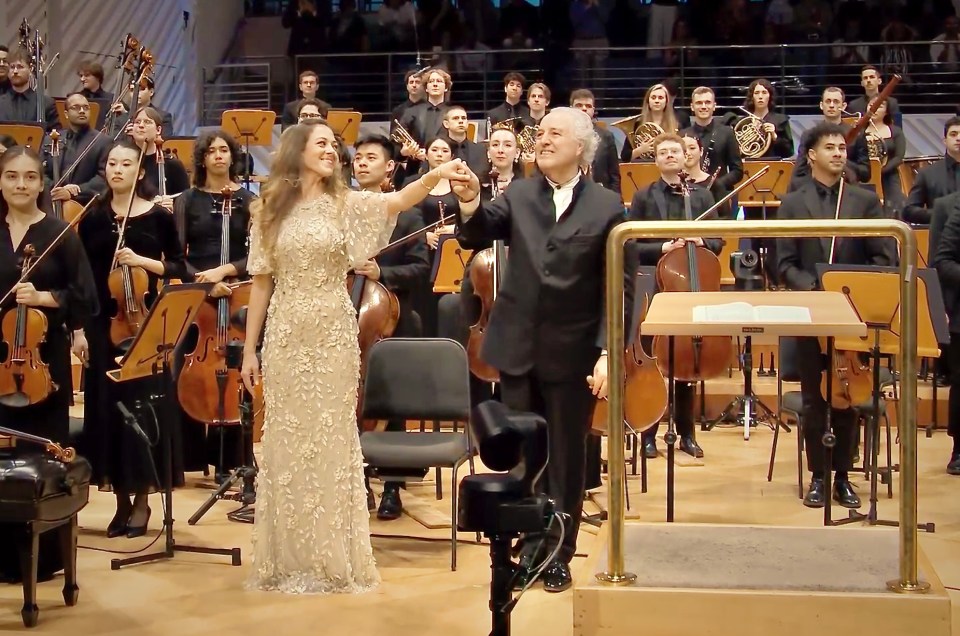
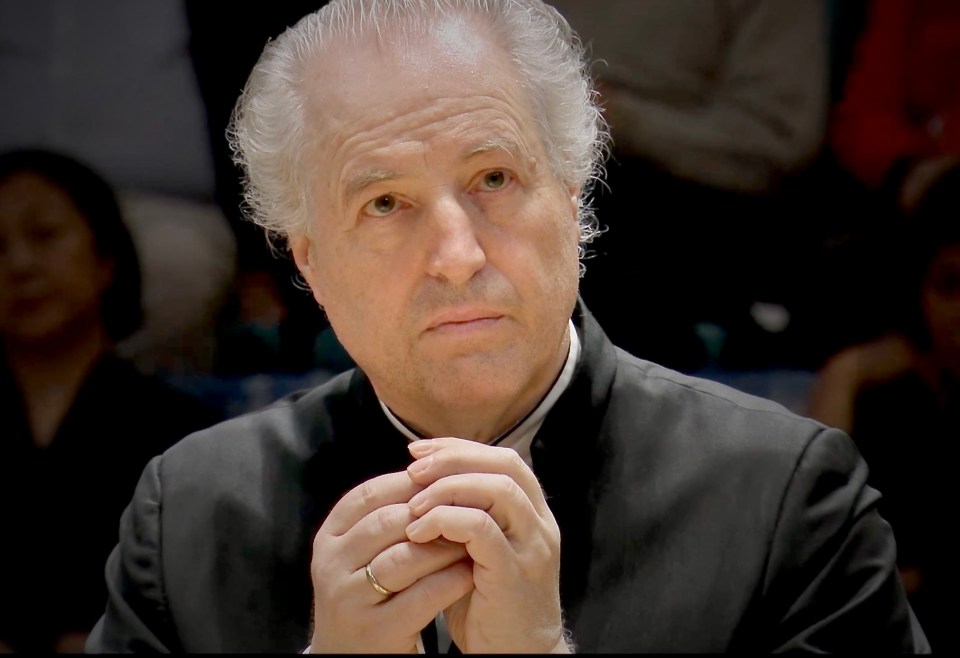
Neither Beethoven, nor Brahms, nor Bruckner, nor Sibelius: it was Mahler—and his unique, unmistakable sound world—who spoke with particular eloquence when Manfred Honeck led the Orchestra Academy of America in the Fourth Symphony, the only Mahler of the 2025–26 season, which became an unexpected yet somehow inevitable crowning moment of the musical year.
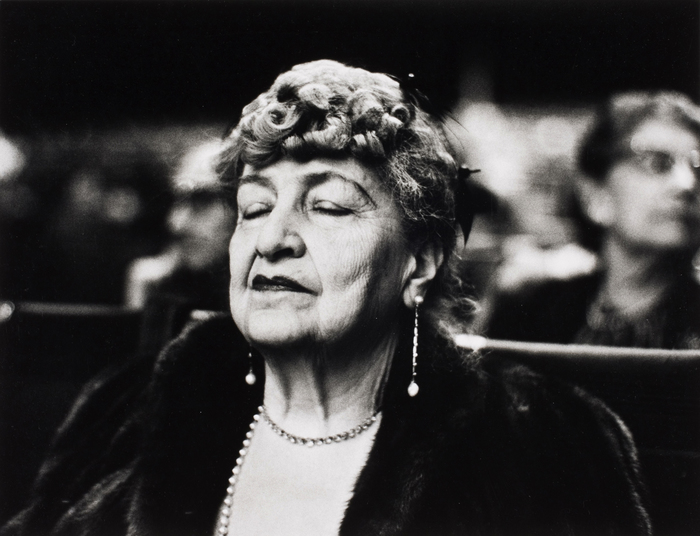
It was then impossible not to recall the revealing image of the octogenarian Alma Mahler at Carnegie Hall, captured by Alfred Eisenstaedt in 1960. The celebrated widow—among other things, “the prettiest girl in Vienna,” according to Tom Lehrer’s caustic song—listens raptly to the work of the most famous of her three husbands; eyes closed, utterly transported. That singular, irreproducible feeling that turns the experience of live music into something without equal was also felt in the Miami Beach auditorium, thanks to the magic conjured by the Austrian conductor, who elicited a remarkable response from the young orchestra.
There are moments that imprint themselves on the memory with indelible force, and the iridescent, almost imperceptible pianissimo that crowned the long third movement was one of those instances in which time seemed to stand still. Honeck rigorously honored Mahler’s elusive indication in the great Adagio marked Ruhevoll, literally a state of “complete peace”—that containing silence so difficult to realize, where each pause acquires as much significance as the note that follows it. By wisely integrating the dramatic climaxes, the broad melodic arc became deeply emotional through the generous breathing of the phrasing favored by Honeck.
This was not an isolated episode but the result of a superb reading, rich in stylistic character, standing apart from the Mahler that today so often sounds uniformly polished. It was a Fourth that felt more pastoral, more playful, more effervescent—in every sense more “Viennese,” though ominously shadowed by the terrors of the Third and the foreboding trumpets that anticipate the Fifth. As a goldsmith Honeck polished details through unusual portamenti, ritardandi, and rubati that lent a golden patina to the overall result. Solos such as the oboe, played by Sooyoung Kim, emerged deliciously, while the violins at times sounded teasing or macabre, even folksy.
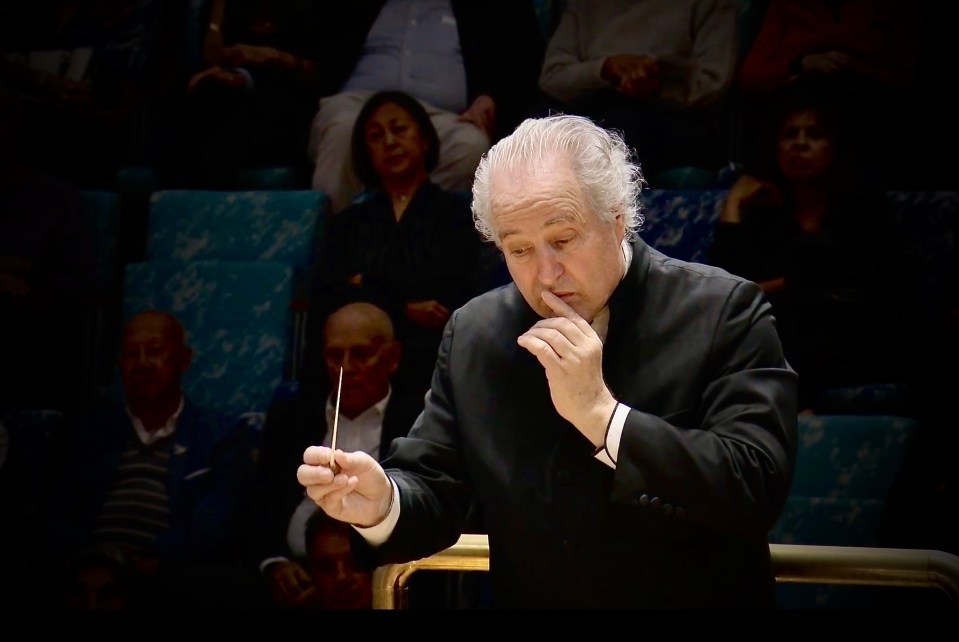
That Viennese flavor had already been established in the first half of the concert with a model overture to Die Fledermaus, sparkling and almost headlong, like an unbridled waltz. An incisive yet elegant Honeck masterfully controlled the vertiginous sweep of the music, literally elevating the share musical value of the often mistreated and misunderstood Johann Strauss II—so admired, no less, by Brahms.
Haydn’s Symphony No. 93 crowned an unusually contemplative yet rustic encounter, with well-aimed touches of humor and an enveloping classical spirit befitting the father of the symphony. In that natural succession of the genre’s development, and drawing on the lustrous sheen of the great Austro-German tradition, Mahler arrived as a logical consequence.
Thus the final movement of the Fourth truly became that Heavenly Life described by the child in Des Knaben Wunderhorn , marveling at the abundance and pleasures of paradise when he sings: “We enjoy heavenly pleasures and avoid earthly ones.” As it unfolded, soprano Lauren Snouffer grew in assurance, offering a clear voice and precise intent, “without parody and distilling joy,” as Mahler demanded. The ending, suspended in a most delicate pianissimo, was followed by an eloquent silence, carefully sustained by the conductor, reinforcing the sensation of stillness and spiritual fullness.
Indeed, “Kein Musik ist ja nicht auf Erden, die unsrer verglichen kann werden”—there is no music on earth that can be compared to ours—the final line of the symphony reflected exactly this memorable epilogue to the year now drawing to a close.