Miami: Tradition and Innovation Share the Stage
The second weekend of January showed Miami revitalized in the field of classical music, successfully engaging both major strands of the genre: tradition and innovation. The former found its stage at the Arsht Center, the latter at the New World Symphony in Miami Beach.
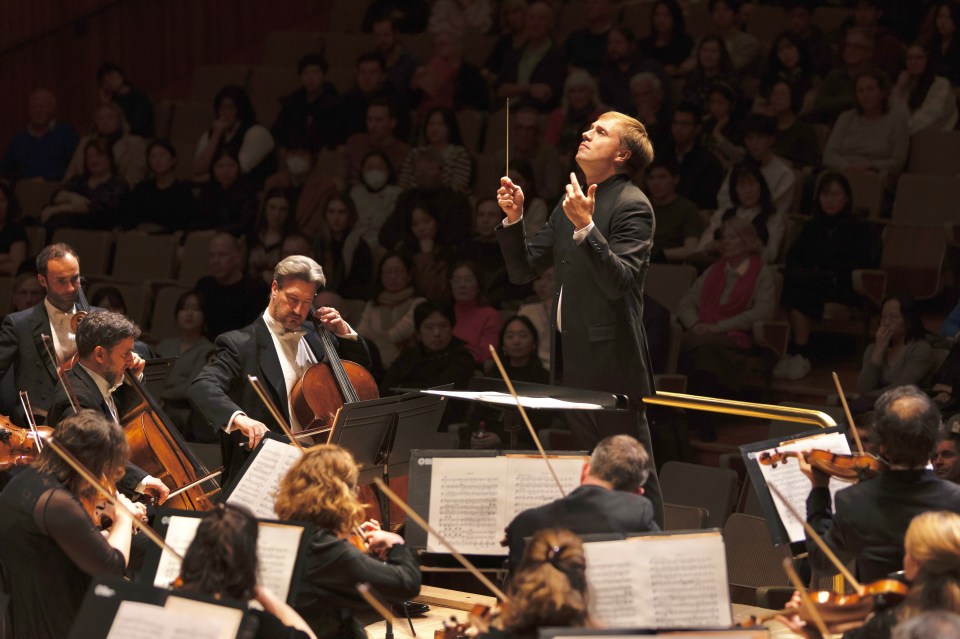
The welcomed return of the Royal Philharmonic Orchestra under the direction of his chief conductor, Russian-British Vasily Petrenko dispelled the somewhat muted impression left by its previous visit in 2018 under Pinchas Zukerman, reaffirming the prestige of its distinguished lineage and reminding audiences why it remains one of London’s five major orchestras. With a conventional but superbly executed program, even the most overfamiliar warhorses emerged unscathed. Petrenko asserted himself with elegant, natural authority, while Ray Chen shone as soloist in Tchaikovsky’s Violin Concerto.
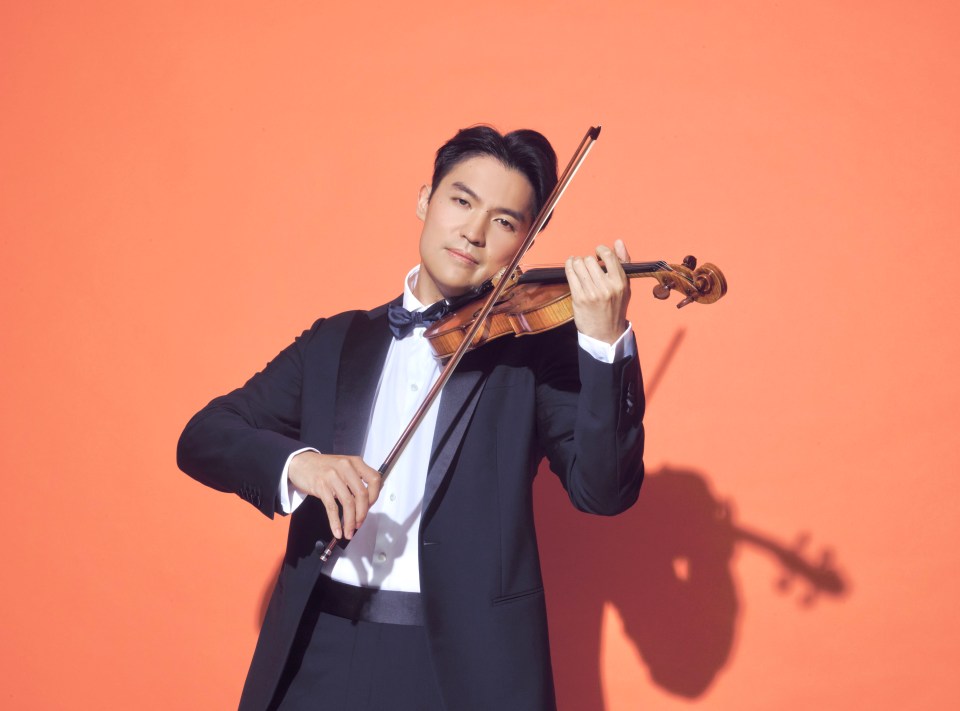
The Taiwanese-Australian virtuoso delivered a performance of undeniable brilliance, albeit at the expense of deeper lyricism. Vigorous accents and a dazzling technical arsenal were clearly aimed at immediate impact. If the second movement provided the necessary poetic respite, shaped with sensitivity, the finale returned to the opening’s driving momentum. The Royal Philharmonic offered solid, disciplined support, maintaining a careful balance with the soloist throughout. As an encore, the charismatic Chen presented his own arrangement of Australia’s “unofficial” anthem, Waltzing Matilda, transformed into a virtuosic fantasy that predictably left the audience enthralled.
The concert opened with Carl Nielsen’s Helios Overture (1903), which, though inspired by the sunrise and sunset over Athens, reveals transparent Wagnerian resonances, at times evoking the Rhine maidens. Rarely heard in our shores, the Danish composer’s work served as an effective calling card.
The unquestioned triumph of the evening, however, was Sibelius’s Second Symphony, in which the orchestra demonstrated full command and authority over a score of considerable stature, justly beloved by audiences. The strings, iridescent in tone, precisely traced the symphony’s final trajectory, bringing light drawn from the stark Nordic landscape into dialogue with the imposing contrasts of the winds. Shadow and light competed musically in a monolithic interpretation, masterfully sculpted by Petrenko. Rooted in the finest European tradition, rich in character, density, and transparency, the performance culminated triumphantly in one of the most celebrated endings in the symphonic canon, with a resplendent outpouring from violins, cellos, and brass. Equally memorable was the Grieg encore, which carried listeners across the Baltic toward a radiant Norwegian spring.
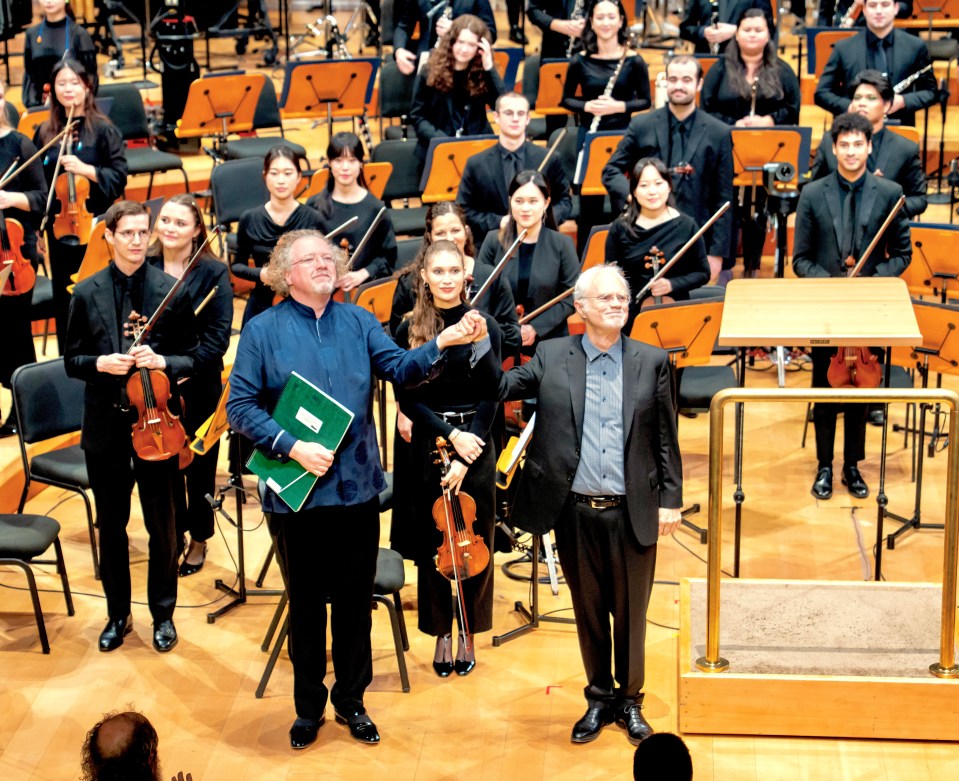
The previous night, the New World Symphony celebrated the 15th anniversary of the New World Center—the striking complex designed by the recently deceased Frank Gehry—with a concert dedicated to his memory. An exhibition installed in the lobby tracing the building’s history served as a memento of the realization of Michael Tilson Thomas’s vision, a fortunate convergence that has placed the city firmly on the musical map beyond its tourist identity.
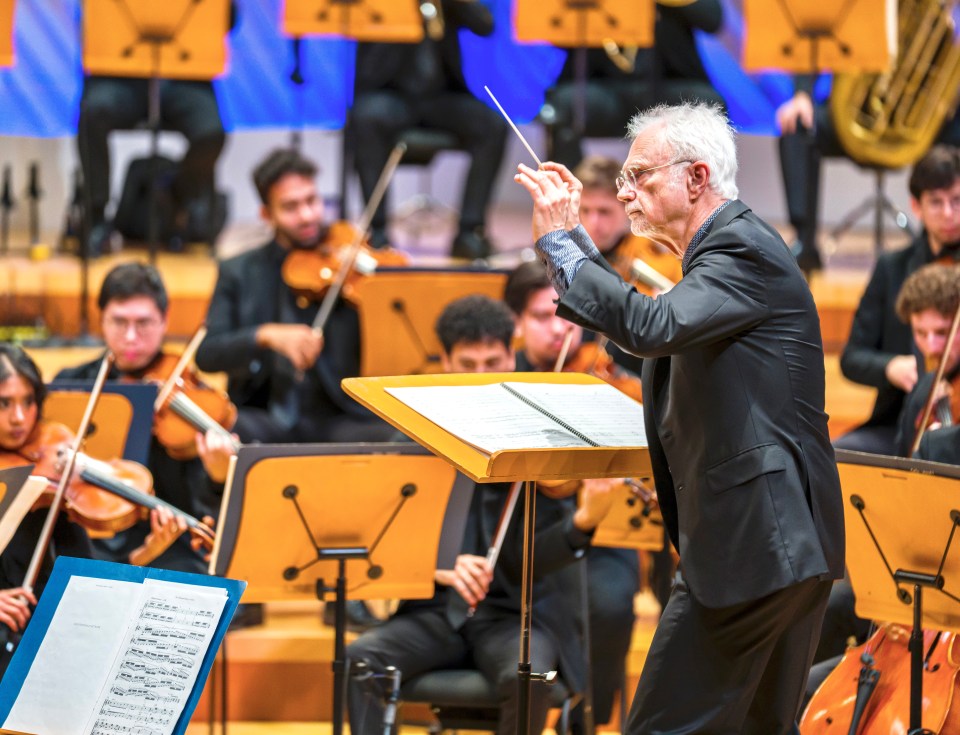
Adding to the occasion was a remarkable confluence: composer John Adams conducting his own works, pianist Víkingur Ólafsson, and Stéphane Denève, artistic director of the NWS. The event, genuinely historic for Miami Beach, was also shared with audience at the adjacent SoundScape Park via a well-attended wallcast.
An evening devoted entirely to John Adams is still a rarity and carries certain risks—as the composer himself joked in his relaxed introductory remarks—since for many listeners his music remains an acquired taste. The program, however, proved to be a broad fresco that clearly illustrated his aesthetic evolution, from early austere minimalism to the richness of his current language. Four decades compressed into four works resulted in a genuine “Adams Festival.”
With The Chairman Dances: Foxtrot for Orchestra (1985), a sketch for the banquet scene of Nixon in China, and I Still Dance (2019), inspired by the partnership of Tilson Thomas and Joshua Robison, the most rhythmic, playful, and immediately recognizable Adams came to the fore. Both works—the second truly a “tocccata on steroids”—also underscored the fertile dialogue between cinema and concert music. Performed with fervor, they became thrilling sonic roller coasters, with the New World Symphony responding exemplary under both Adams and Denève.
Just as Richard Strauss distilled the essence of Der Rosenkavalier and Die Frau ohne Schatten into two splendid orchestral suites, Adams—an operatic composer by nature—does the same in the Doctor Atomic Symphony, an orchestral compendium of his 2007 opera on Robert Oppenheimer and the creation of the atomic bomb. In its three movements—The Laboratory, Panic, and Trinity—Adams constructs a masterful triptych that not only summarizes the opera but arguably expands it. From the cinematic impact of the opening to the fiendishly intricate string writing of the second movement, where the orchestra’s fellows shone brilliantly, the work culminates in a monumental finale. There, Adams entrusts the trumpet—impeccably played by Jack Farnham—with a transformation of the baritone aria “Batter my heart, three-person’d God,” carving a melody as moving as it is desolate. Denève led with ferocity a score that demands everything.
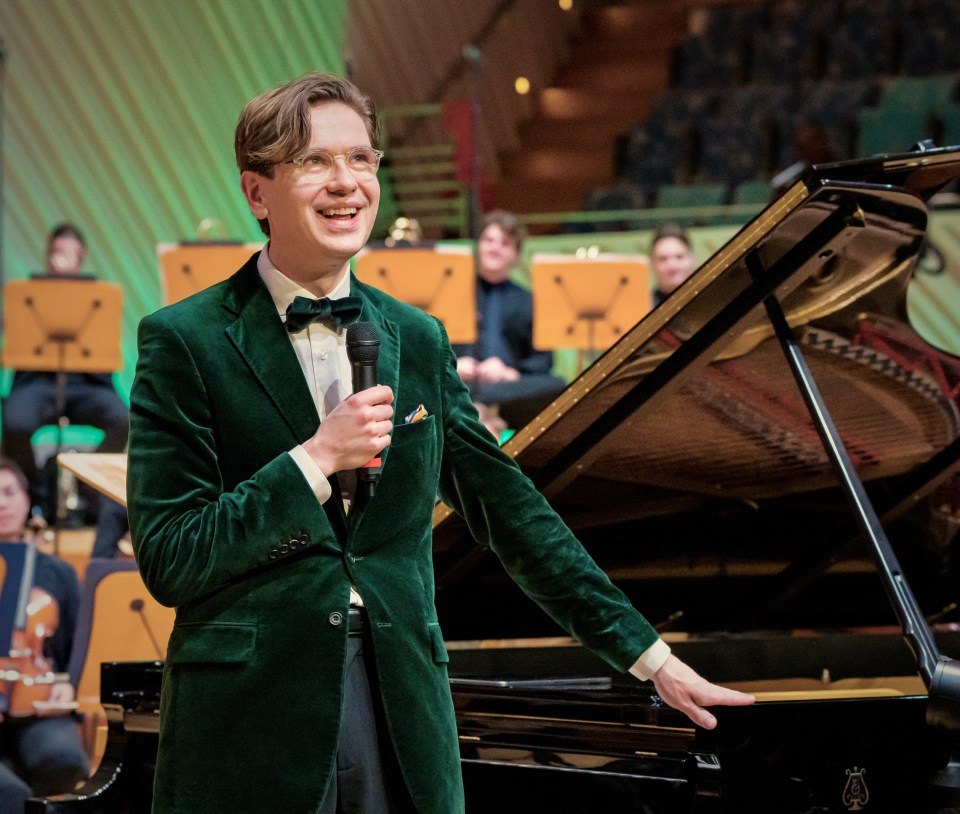
The core of the program was After the Fall (2024) for piano and orchestra, Adams’s third piano concerto, conceived for Víkingur Ólafsson and performed here under the composer’s own direction. Cast as a single, continuous span of approximately 25 minutes, the work adopts an implicit three-part structure and clearly differentiates itself from its predecessors through a more introspective and refined discourse, tailored to the Icelandic pianist. Deeply shaped by Ólafsson’s Bach-inflected sensibility, the concerto gradually integrates the piano into a translucent, urgent orchestral fabric without interruption.
The tension between tradition and modernity becomes explicit in the reworking of the C-minor Prelude from Bach’s Well-Tempered Clavier in the final section. Far from decorative quotation, Adams here celebrates continuity with the past as a panoramic contemplation of musical civilization, borrowing from it with wit and responsibility. Without heroics or posturing, he assumes the risk of reimagining it for the future. The orchestra accompanied the soloist with clarity as Ólafsson progressively took command of the discourse, culminating in the fierce Bach–Adams tour de force, dispatched with astonishing virtuosity.
Víkingur Ólafsson—perhaps the most prominent young pianist on today’s international scene—not only fulfilled the expectations that preceded him; he truly dazzled and offered an encore as apt as it was sublime: a transcription of the Andante from Bach’s Organ Sonata No. 4, dedicated to Gehry, serving as the final, wise piece of the puzzle. Bach as essence, beginning, and end, to whom one inevitably returns. An unforgettable coda that calls for his swift return and reminds us of music’s ultimate purpose: to nourish the human spirit.
NEXT CONCERTS:
SERIE KNIGHT MASTERWORKS ARSHT CENTER
NWS photos by Alex Markow- Royal Philharmonic Photos by Frances Marshall and Ben Wright
