Madrid Conquers Miami: The Teatro Real Orchestra Makes Its Debut
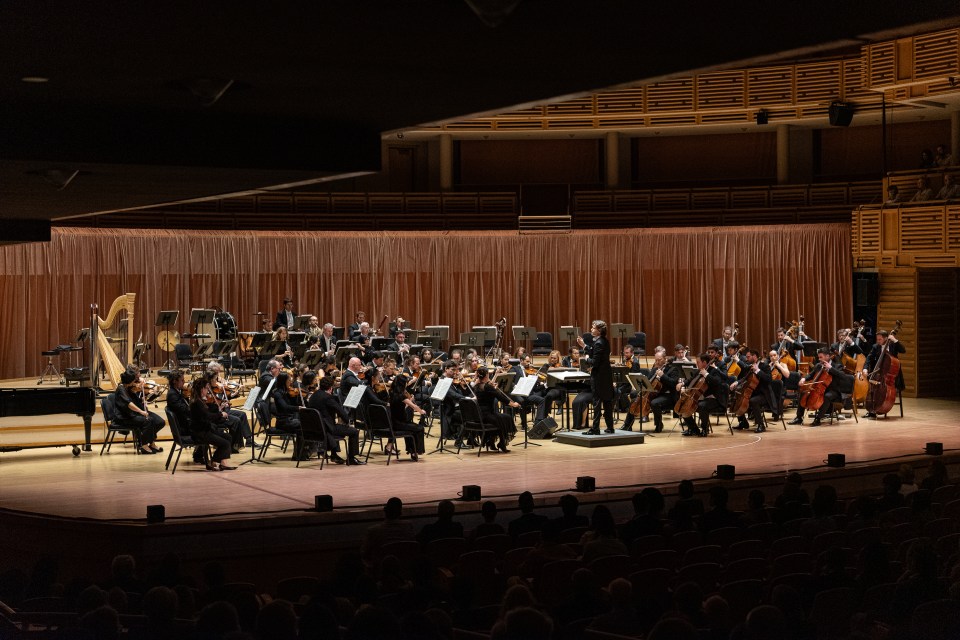
The passion of Manuel de Falla, the poetry of Joaquín Rodrigo, and the orchestral splendor of Rimsky-Korsakov shaped the Miami debut of the Madrid Teatro Real Orchestra, which performed Saturday at the Adrienne Arsht Center as part of its fifth U.S. tour. Led by Gustavo Gimeno, the program, though overly safe in its choice of works, traced a path between two musical worlds: the expressive language and colors of Spanish music on one hand, and the symphonic exuberance of the Russian tradition on the other.
The first half was the more compelling. In Falla’s El amor brujo, Gimeno combined mystery, tension, and rhythmic vitality, with particular success in the “Ritual Fire Dance,” where exchanges between strings and winds built toward a spectacular finale. The conductor demonstrated a remarkable ability to balance the sections and preserve the transparency of a score in which every instrumental color has a purpose.
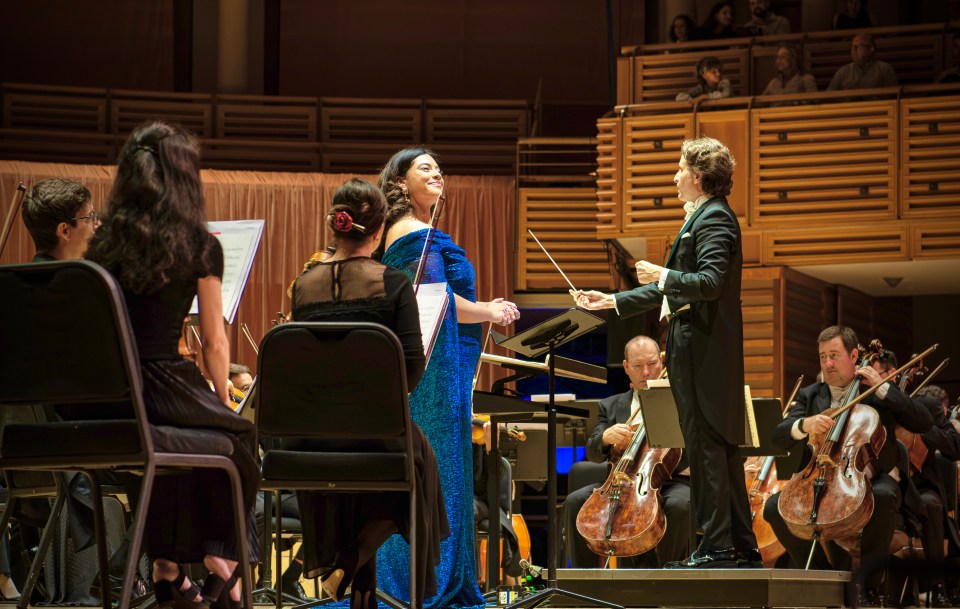
Nicaraguan-American soprano Gabriella Reyes distinguished herself in Falla’s Seven Spanish Folk Songs. A rising star, she brought particular warmth to “Asturiana” and “Nana,” while the livelier songs showcased her energy, impeccable diction, and incisive articulation. It was the encore, however, that revealed her full temperament. In “Carceleras,” from Ruperto Chapí’s zarzuela Las hijas de Zebedeo, Reyes delivered a spirited, coquettish, exuberant performance that won over the audience and recalled the theatrical vitality of the Spanish lyric tradition.
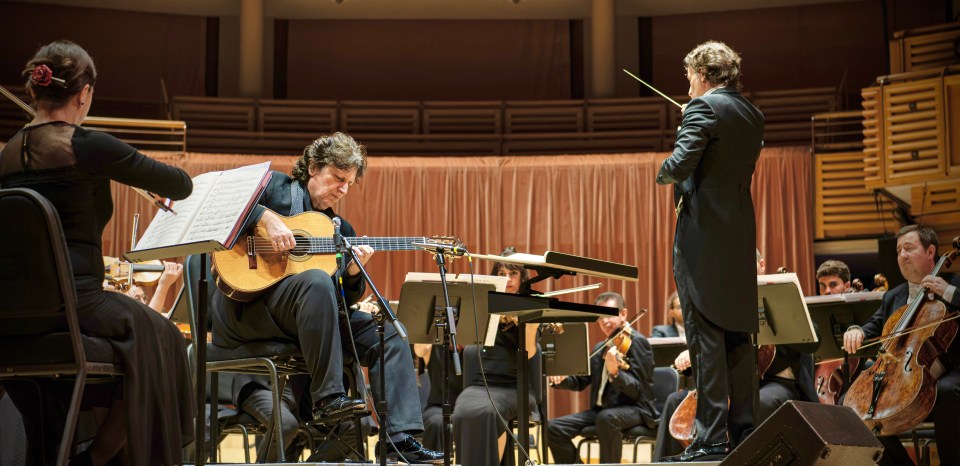
Joaquín Rodrigo’s Concierto de Aranjuez, one of the most popular works in the Spanish repertoire, was among the evening’s most anticipated offerings. Juan Manuel Cañizares explored the guitar’s expressive possibilities with virtuosity. The celebrated Adagio, with its evocative English horn solo, was one of the concert’s most beautiful moments. For his farewell, the guitarist offered “Cádiz,” from his Suite Al-Ándalus, extending the Spanish flavor of the evening with a highly personal interpretation.
After the intermission, the musical landscape changed dramatically. Rimsky-Korsakov’s Scheherazade unfolded its palette of orchestral colors in a world far removed from Falla’s rhythmic concision and Rodrigo’s intimacy. Concertmaster Guergana Gergova impressed in the violin solos that embody the storyteller, while Gimeno maintained control of a score demanding both individual virtuosity and a firm grasp of symphonic architecture.
Although Scheherazade provided the evening’s grandest orchestral display, it was Spanish music that left the more personal impression. Paradoxically, a score as familiar and frequently performed as Rimsky-Korsakov’s seems to have lost some of its place in regular concert programming. Yet familiarity does not necessarily diminish its appeal when the work becomes a test of an orchestra’s capabilities. Here, it offered an opportunity to hear how an ensemble accustomed to the opera pit can perform with equal assurance in the symphonic repertoire, displaying instrumental refinement, rich timbral variety, and a formidable command of the score’s technical demands. Gimeno’s achievement lay in distinguishing the languages of the two repertoires while attending to each work’s precision, color, and dramatic architecture.
As the orchestra’s encore, the prelude to Federico Chueca’s (1846–1908) zarzuela El bateo provided a festive burst of color, bringing this authentic Iberian gala to a fitting close.
The Teatro Real Orchestra left Miami to an enthusiastic reception and made an excellent impression, the packed Knight Concert Hall at the Arsht Center bodes well for the start of the classical season.
Fotos: © Alba Lucia Lepe Soriano
