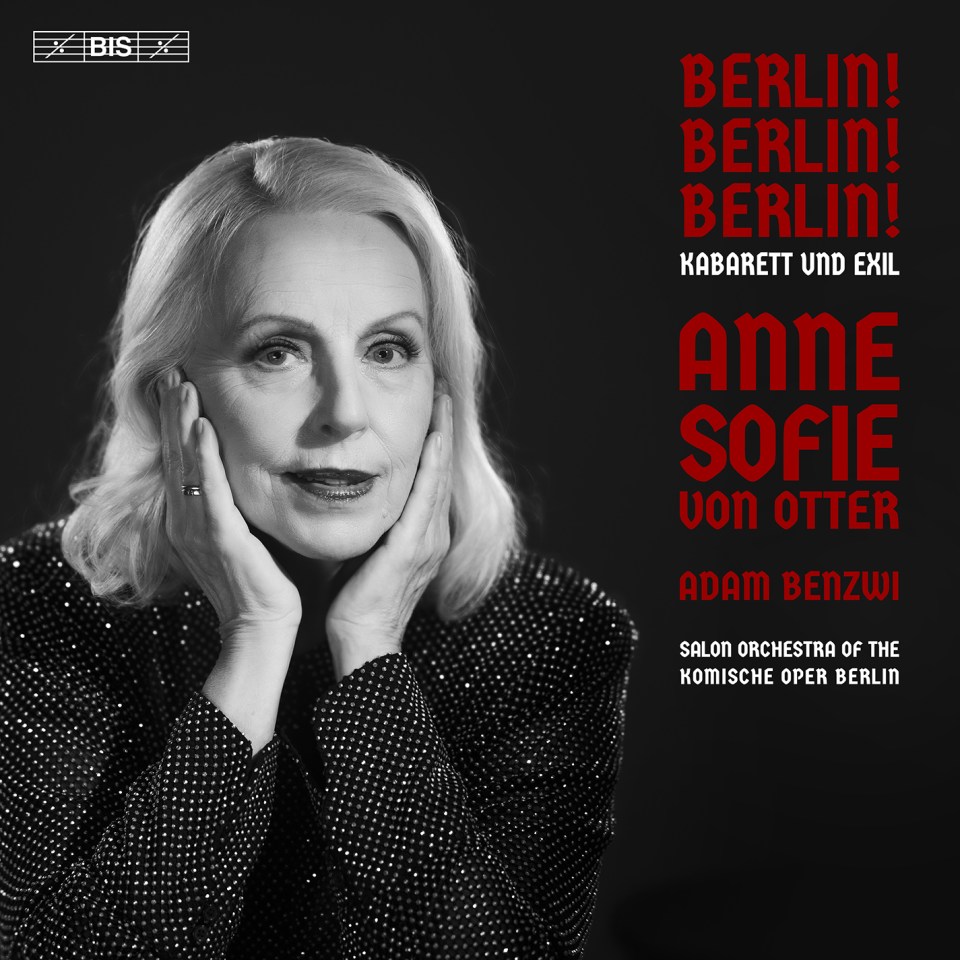
Merci, Anne-Sofie
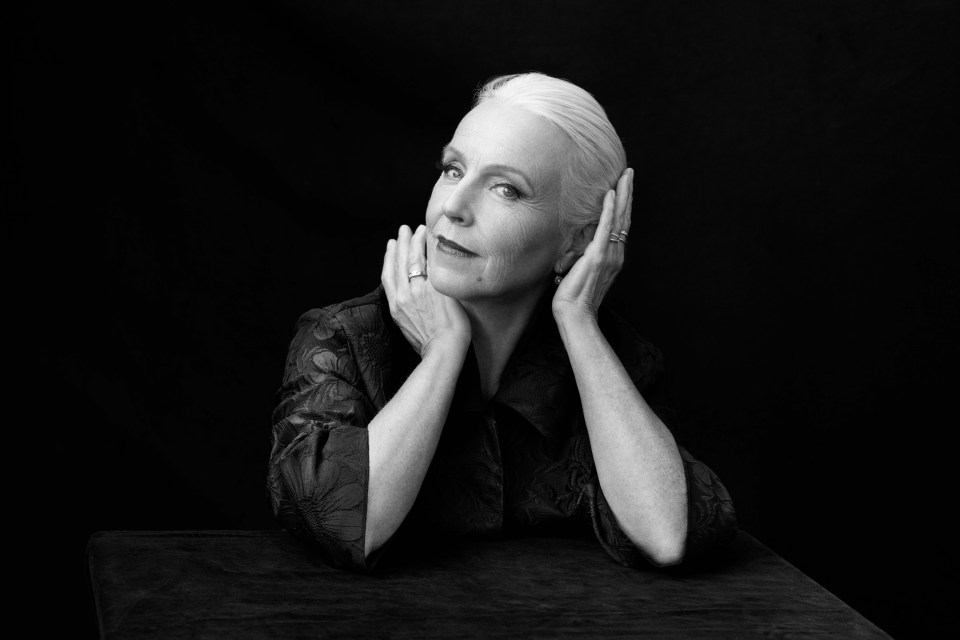
There are still artists whose greatness lies not merely in the excellence of their performances, but in their ability to reinvent themselves without ever betraying themselves. Few embody this quality more eloquently than Anne Sofie von Otter. In the twilight of a career spanning more than four decades—and one that has yielded benchmark recordings of Mahler, Strauss, Mozart, Bach, Handel, Gluck, Berlioz, and the great Scandinavian repertoire—the Swedish mezzo-soprano surprises us once again with a recital as unexpected as it is entirely consistent with the artistic journey she has pursued from the very beginning. This fascinating Berlin Berlin represents a new chapter in the tireless quest of an artist who has never mistaken fidelity to the repertoire for creative immobility.
Few singers have moved so effortlessly between opera, Lied, popular song, Baroque music, contemporary repertoire, jazz, and the French chanson. Far from diluting her artistic identity, that curiosity has only strengthened it. I count myself among those who have followed her remarkable journey since the now legendary Grieg recital of 1985, through her sparkling recent immersion in the French song tradition, and now to this latest destination, where she opens yet another door—different, yet somehow entirely her own.
It is hardly surprising that she should choose to explore the world of interwar Berlin. What is truly admirable is the intelligence with which she does so. Rather than presenting a comfortable anthology of Berlin cabaret favorites, she fashions a far richer and more sophisticated musical itinerary in which film songs, Schlager, musical theatre, Brecht, Weill, and Hanns Eisler coexist with complete naturalness. From Friedrich Hollaender’s songs of 1930 to his exile masterpiece Illusions (from Billy Wilder’s A Foreign Affair, 1948), alongside works by Lothar Brühne, Bruno Balz, and others, the result is neither an archaeological reconstruction nor an exercise in nostalgia, but a contemporary meditation on a society witnessing the collapse of its own certainties while turning entertainment into both refuge and a means of survival.
The Weimar Republic produced one of the most dazzling urban cultures of the twentieth century, yet also one of its most contradictory. In the space of only a few years, artistic exuberance, modernity, Expressionism, jazz, women’s emancipation, political satire, and the birth of sound cinema coexisted with economic collapse, ideological radicalization, and the slow ascent of National Socialism. Berlin cabaret absorbed all these tensions. Beneath its apparent lightness lay a fierce social critique in which humour, melancholy, and cynicism exposed precisely what society preferred not to acknowledge. That complexity forms the true heart of this extraordinary songbook, inviting us constantly to read between the lines.
Now a gallant seventy, von Otter knows her instrument with complete honesty, shaping every phrase around what she can express today better than almost anyone else: nuance, intention, and the colour of every word. Time has not diminished her communicative powers; it has enriched them. Such mastery allows Sprechstimme to emerge whenever the score demands it. She whispers, converses, smiles, caresses words, hurls them with biting irony, narrates with tenderness or moving simplicity, and delights in a lower register beautifully burnished by the patina of time, even daring to take on Der Wind hat mir ein Lied erzählt, forever associated with the legendary Zarah Leander, her distinguished compatriot.
The programme includes the cryptic Über den Selbstmord by Bertolt Brecht and Hanns Eisler, where every trace of irony disappears, giving way to an almost unbearable emotional nakedness. The selections from the Hollywood Liederbuchreveal another equally fascinating dimension: that of the exile who transforms memory into music. No less significant is Marterl, from Kurt Weill’s Berliner Requiem, which reunites her with a composer whose music she memorably recorded with Sir John Eliot Gardiner. Equally revealing is the subtle resonance this recital shares with Terezín, that extraordinary album devoted to songs composed in the Theresienstadt concentration camp, where she deliberately eschewed all sentimentality, placing her trust entirely in the expressive force of music and text.
The superb Salon Orchestra of Berlin’s Komische Oper is another of the recording’s greatest triumphs. Under the direction of the American conductor Adam Benzwi, the ensemble recreates with remarkable authenticity the unmistakable sound world of Berlin between 1920 and 1940, seamlessly blending the influence of American jazz—which von Otter perceptively describes as Schwing, «Prussian jazz»—with music hall, Viennese operetta, tango, and urban popular music.
Von Otter instinctively understands the fragile equilibrium between laughter and tragedy. She contemplates that vanished world from the perspective afforded by a century of history and, precisely for that reason, makes it feel profoundly contemporary. That may well be the album’s greatest achievement. Unlike so many similar projects, Berlin Berlin does not seek to reconstruct a lost era or indulge in nostalgia for the Weimar Republic. Nor does it turn cabaret into a museum piece. Instead, it approaches this repertoire through a thoroughly modern sensibility, revealing the extent to which these songs continue to speak to societies that still seek refuge in entertainment while sensing that the world around them is changing irreversibly. The result is penetrating, lucid, and illuminating, yet animated above all by the unmistakable delight of an artist who relishes every one of these miniature masterpieces, polishing them until they achieve that effortless spontaneity which can only arise from consummate artistry. In that delicate balance, she has fashioned a recital that is not merely admirable, but indispensable.
And if the autumnal Leben ohne Liebe kannst Du nicht, which closes the album, leaves the listener with one eye in tears and the other smiling—in the finest tradition of Strauss’s Der Rosenkavalier—the delightful Merci mon ami, es war wunderschön makes it impossible to resist borrowing its title and offering, in return, a heartfelt and richly deserved: Merci, Anne Sofie.
BERLIN BERLIN BERLIN! KABARETT UND EXILE – BIS-2827