Prokofiev at the NWS & A Dazzling James Ehnes
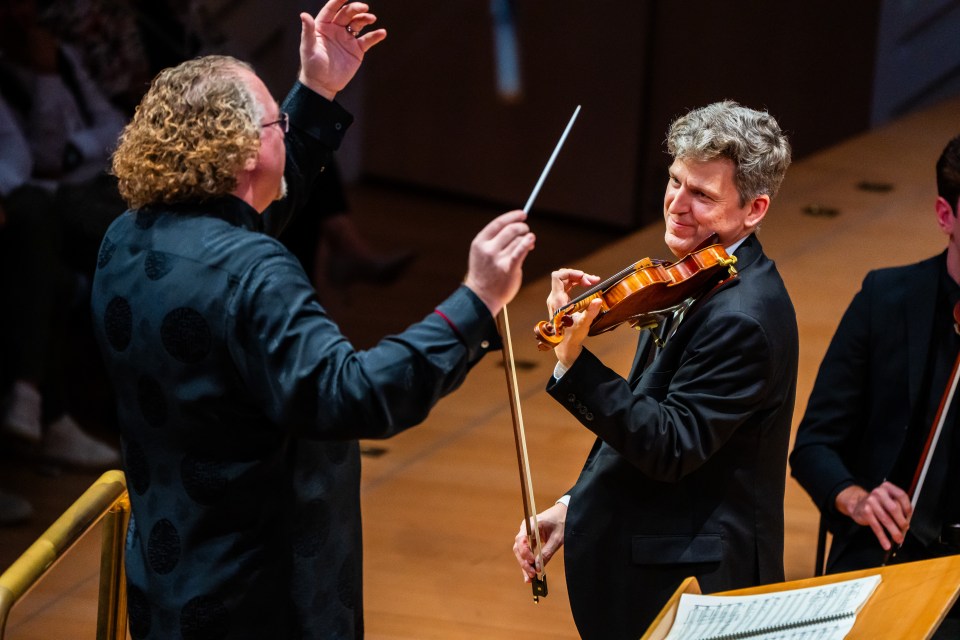
An entire evening devoted to a composer such as Sergei Prokofiev can be a risky proposition in Miami, particularly when is a lenghty program and its centerpiece consists not of one, but of both of his concertos for the same instrument—in this case, the violin. If such a program poses a challenge to the audience’s powers of concentration, it does so even more for the soloist, who must sustain an exceptionally high level of technical and expressive intensity throughout much of the evening. Yet the challenge all but disappears when the performer is James Ehnes, the star of the Prokofiev evening presented by the New World Symphony on Saturday at the New World Center.
Under the direction of Stéphane Denève, the Canadian violinist approached both concertos with an authority that went far beyond a display of virtuosity. What emerged was a masterclass in musicianship and expressive depth. Ehnes belongs to that rare category of artists whose dazzling technique never becomes an end in itself. Impeccable in both works, he navigated their considerable demands with an assurance that never called attention to itself.
His excellence was matched by his rapport with Denève, whose attention to detail, balance, and nuance fostered a fluid musical dialogue between soloist and ensemble. Far from merely providing accompaniment, the conductor fashioned a sensitive orchestral framework that gave the violin ample room while preserving the richness and complexity of Prokofiev’s orchestral writing.
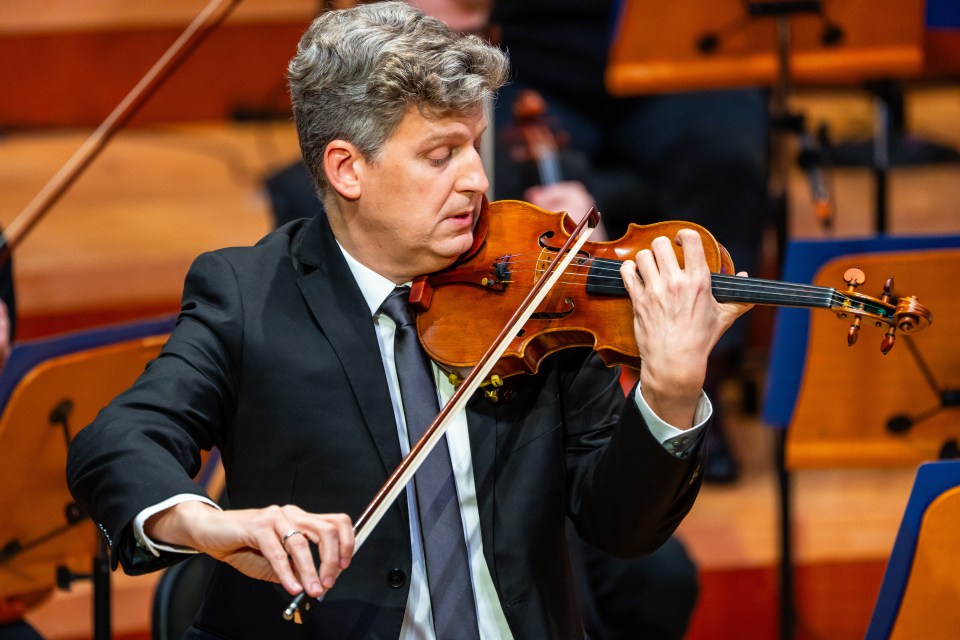
The Violin Concerto No. 1, composed between 1916 and 1917, found an ideal interpreter in Ehnes. From the outset, his expansive tone lent the work’s lyricism an almost vocal quality. The second theme, with its folk-inspired character, acquired the necessary freshness and spontaneity without lapsing into contrived rusticity. In the Scherzo, he displayed breathtaking agility, always in the service of the music’s mercurial character. The finale once again revealed the refinement of his phrasing and his ability to sustain expressive tension without resorting to theatrical effects.
The Violin Concerto No. 2, dating from 1935, revealed a more streamlined expressive world, less overtly exuberant in appearance. Here, Ehnes found the perfect balance between the transparency of the writing and the emotional intensity beneath its understated surface. His coordination with Denève was particularly striking in those passages where the orchestra seems to recede, leaving the violin suspended in an atmosphere of almost chamber-like intimacy. The Andante allowed the soloist to unfold a line of extraordinary beauty, avoiding any hint of sentimentality. Beyond the instrumental feat, what remained was the impression of a musician’s musician—one of those rare artists who need not impose their personality to make it unmistakable. Ego is set aside, not out of affected modesty, but because it is simply unnecessary. At a time when individual display is so often mistaken for artistic excellence, Ehnes’s approach to music-making stands as an model to be followed.
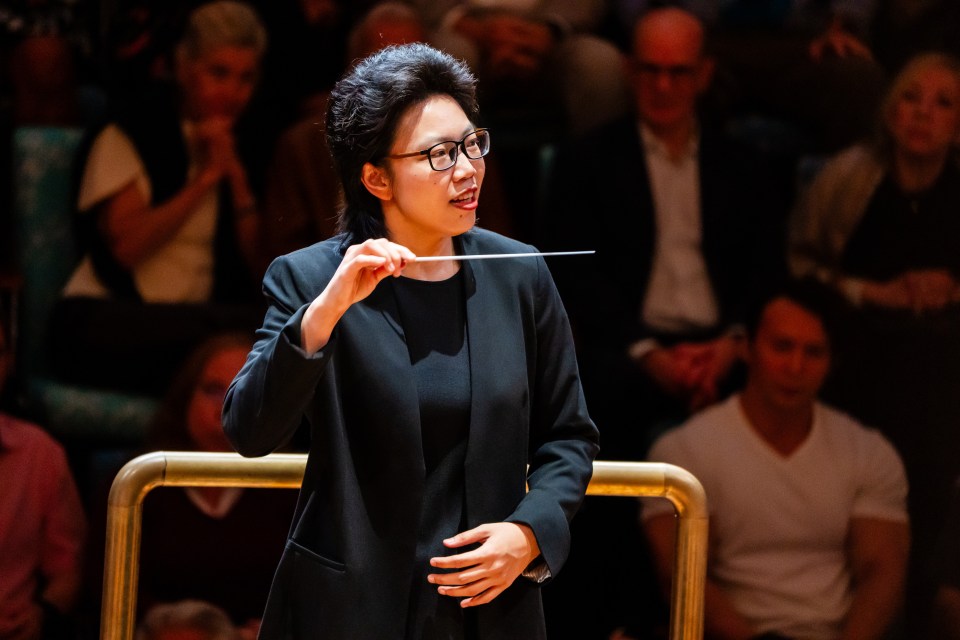
The evening opened with the Symphony No. 1, «Classical,» under the baton of Ziwei Ma. With its deliberate evocation of Classicism filtered through Prokofiev’s irreverent musical language, Ma delivered an energetic reading, attentive to the interplay of orchestral layers and the clarity of textures. It was a commendable performance that places her among the most impressive conducting fellows to have appeared at the New World Symphony.
As a final course: dessert with the Suite from The Love for Three Oranges, a display of imagination, humor, and orchestral exuberance that once again put the ensemble’s versatility to the test. Prokofiev pours into this music all the pomp, sarcasm, and grotesque fantasy of his opera, inspired by the traditions of the Commedia dell’arte. The suite unfolds through a succession of contrasts, rhythmic vitality, theatrical gestures, and a deliberately provocative orchestral palette. Denève moved through this musical universe with complete assurance, emphasizing its grandiloquence while maintaining control over an extraordinarily vivid score. The orchestra responded with infectious energy, turning the suite into a celebratory finale.
Ultimately, this was an evening in which Prokofiev occupied center stage, his music revealing its remarkable capacity to alternate between lyricism, irony, rhythmic violence, and sheer inspiration. Denève’s introductory remarks before each work, though informative and illuminating, eventually seemed somewhat redundant in the face of music so compelling that it speaks entirely for itself. And in the case of James Ehnes, it spoke with exceptional eloquence.
PHOTOS BY ALEX MARKOV
